Key Takeaways (TL;DR): Searching for a fake ticket generator is more dangerous than it sounds. Fake tickets are easy to detect, carry serious legal consequences, and will get you turned away at the door. Modern event ticketing platforms use unique QR Codes and live validation to catch duplicates and counterfeits instantly. If you’re organizing an event and need tickets fast, there’s a safer and fully legal alternative. Ticket Generator lets you create professional, fraud-proof event tickets in minutes with no design skills, no commissions, and no risk. This article explains how it works and why it’s the only approach worth considering.
Every month, thousands of people type "fake ticket generator" into Google. Some are curious. Some want a prank prop. And some, let's be honest, are looking for a way to get into an event without paying.
Here's the problem: it almost never works, and the consequences can be serious.
According to the Better Business Bureau's 2023 Scam Tracker Risk Report, ticket fraud ranked among the top five riskiest scam categories for consumers, with a median dollar loss of $152 per victim, and that's just on the buyer side.
For the people creating fake tickets, the exposure is far greater: criminal fraud charges, venue bans, and permanent reputational damage.
Modern ticketing platforms have made fake tickets easier to catch than ever before. Every legitimate ticket today carries a unique QR Code tied to a live database. The moment a fake or duplicated ticket is scanned, the validator flags it instantly, in front of everyone at the door. There is no workaround.
I've put together this guide to explain exactly what happens when someone tries to use a fake ticket, why the technology makes it a losing game, and, more usefully, how to create real, valid event tickets the right way, whether you're organizing a 50-person workshop or a 2,000-seat conference.
If you want to understand the security mechanics behind QR-based ticket validation, our deep dive on QR Code ticket security is worth reading alongside this one.
Let's get into it.
A. What do people actually mean by “fake ticket generator"?
When someone searches for a fake ticket generator, they're usually looking for one of three things.
The first is a prop or novelty ticket, something that looks like a real event ticket but isn't meant to get anyone into an actual venue. Think birthday gags, scavenger hunt clues, or themed party invites.
The second is a counterfeit ticket, a copy of a real ticket designed to deceive event staff and get someone in without paying or registering. This is where things get legally dangerous.
The third, and most common, is actually a misunderstanding of language. Many people searching this phrase are event organizers who want to generate tickets for their own events. They just used the wrong words.
If you're in that third group, good news: you're in the right place, and the rest of this article is for you.
If you're in the second group, keep reading because what you're considering is significantly riskier than you probably realize.
B. What are the real risks of fake event tickets?
The technology catches fakes immediately
Let's start with the most practical risk: fake tickets simply don't work at modern events.
Every ticket generated by a legitimate ticketing platform carries a unique QR code linked to a live database. When a coordinator scans it at the door, the system checks that code against the event's guest list in real time.
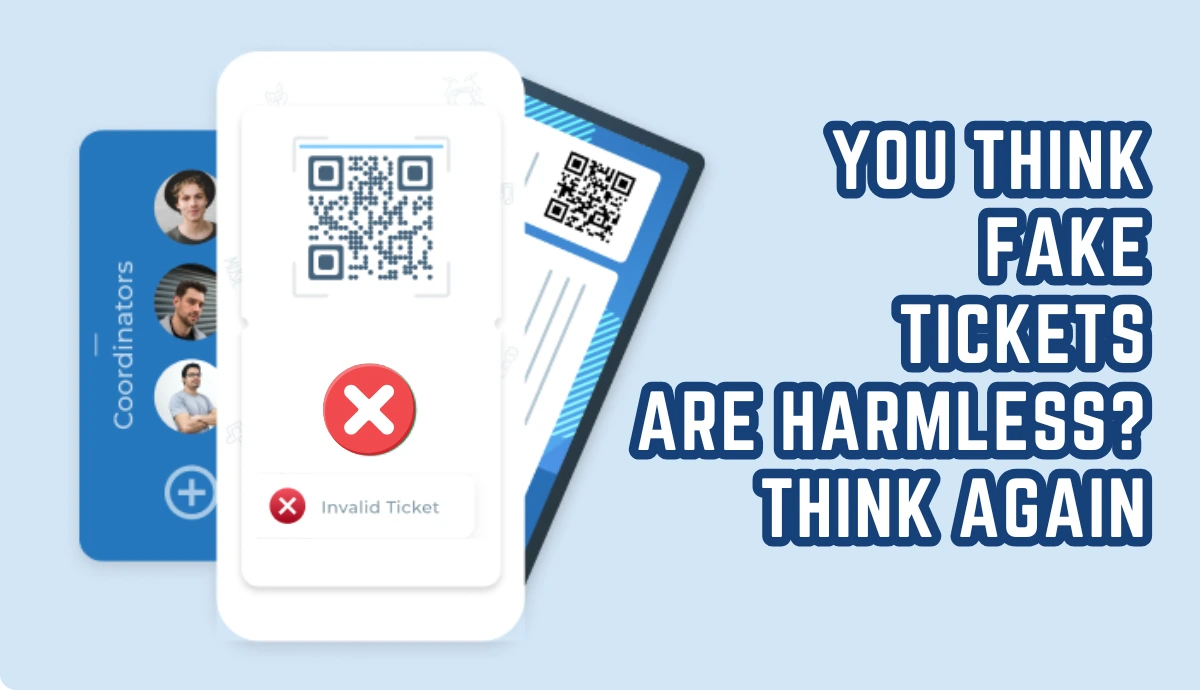
A fake ticket, whether it's a screenshot, a photocopy, or a digitally altered file, won't have a code that exists in that database. The result is an instant "Invalid" flag on the scanner. You get turned away, usually in front of a queue of people.
Even duplicating a real ticket doesn't help. If two people show up with the same QR code, the second scan is flagged as "Duplicate" and denied entry. The system is designed specifically to catch this scenario.
The legal exposure is real
Beyond the embarrassment of being turned away, there's a more serious consequence: ticket fraud is a criminal offense in most jurisdictions.
In the United States, creating or distributing counterfeit tickets can be prosecuted under federal wire fraud statutes, carrying penalties of up to 20 years in prison under 18 U.S.C. § 1343. In the UK, the Fraud Act 2006 covers ticket counterfeiting directly. Similar laws exist across the EU, India, and Australia.
Courts don't distinguish between "I only made one fake ticket for myself" and large-scale counterfeiting operations. Intent to deceive is enough.
You also risk harming the event organizer
This part often goes unmentioned. When fake tickets circulate, the people who suffer most are frequently the organizers themselves.
They lose revenue on every fraudulent entry. Their capacity limits get violated. Their security credibility takes a hit. In some cases, over-capacity venues face safety and compliance consequences.
Creating fake tickets isn't a victimless shortcut. It causes real harm to real people who put real work into running an event.
C. How does real event ticketing actually work?
Understanding this is genuinely useful, whether you're an organizer or an attendee.
The ticket is just the visible layer
A real event ticket, the thing with your name, the event logo, and the QR Code, is the surface layer of a much more robust system underneath.
When a legitimate ticket is generated, it gets assigned a unique Ticket ID and a unique QR code. Those two identifiers are stored in the event's database, linked to the specific guest and ticket category.
That database is what the validator checks at the door. Not the design. Not the paper. Not even the QR image itself, it's the data behind the QR code that matters.
This is why you can't fake a ticket by copying the image. The copied QR code contains the same data string as the original. When the validator cross-references that string, it sees it was already used. Duplicate. Denied.
Three outcomes every validator produces
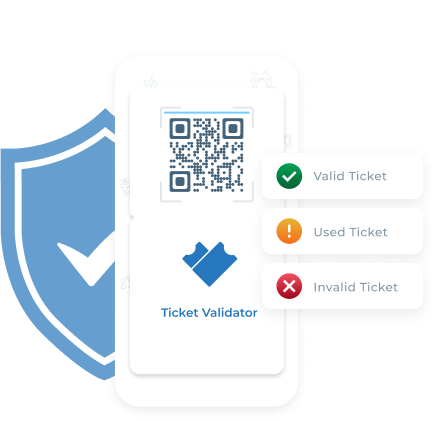
Any legitimate ticketing system produces one of four responses when a ticket is scanned:
Valid — the ticket exists, hasn't been used, and is within the activation window. Entry granted.
Invalid — the code isn't recognized in the system. Could be a forgery, a wrong event, or an expired ticket from a different system.
Duplicate — this code was already scanned. Entry denied.
Expired — the event has ended, or the activation window has closed.
There's no fifth option. There's no "close enough." The system is binary.
Why QR codes specifically?
QR codes replaced printed barcodes and manual guest lists because they're faster, harder to clone, and machine-verifiable in real time.
A well-implemented QR ticketing system can process hundreds of guests per minute across multiple entry gates simultaneously.
Each scan takes under a second. And because the validation happens against a live database, the same ticket can't be used twice, even if two people are standing at different gates at the same moment.
This is why events ranging from small corporate workshops to stadium concerts now rely on QR-based ticketing. The technology works.
D. How to create secure, real, valid event tickets (the right way)
If you're an event organizer, and I suspect most of you reading this are here's the straightforward process for creating legitimate tickets that actually get people through the door.
Step 1: Choose a dedicated ticketing platform
Don't use image editors, presentation software, or generic form tools. Use a platform built specifically for event ticketing.
A proper ticketing platform handles the whole workflow: event setup → ticket design → registration → generation → distribution → validation. Each step feeds into the next. The security features are built in; you don't have to configure them.
Step 2: Set up your event
The first thing you create is the event itself. This includes the event name, date, time, venue, and ticket categories.
Ticket categories let you offer multiple ticket types within one event, like General Admission, VIP, Early Bird, and Staff, each with its own design, price, and capacity limit.
Get the timing right. Most platforms require your ticket activation window to open at least a few minutes before the event starts. This prevents early-scanner fraud and protects your capacity.
Step 3: Design your ticket
You don't need a graphic designer.
Modern ticketing platforms offer pre-built templates you can customize with your event branding, or let you upload your own background artwork. Either way, the system (if it’s like Ticket Generator) automatically embeds the unique QR Code and Ticket ID on every ticket (no manual work required).
The key variable fields to include are guest name, ticket category, event date, and venue. These get auto-populated from your guest list when you generate tickets in bulk.
Step 4: Choose how to generate and distribute tickets
There are typically four generation methods available:
Direct/manual — enter guest details one by one. Good for VIP tickets or small lists.
Bulk upload — upload a spreadsheet of guest names and emails. The platform generates and sends all tickets automatically. Best for known guest lists.
Registration-driven — guests register through your event page and tickets are auto-sent on approval. Best for open or paid events.
API — for developers who want to integrate ticket generation into their own systems.
Distribution happens via email, SMS, or WhatsApp. Guests receive a ticket image or PDF they can save to their phone or print.
Step 5: Validate at the door
Before the event, assign coordinators to your guest list and point them to the validator app. They download it on their phones, log in, and they're ready to scan.
On the day, each coordinator opens the event in the app and starts scanning. The result appears instantly: Valid, Invalid, Duplicate, or Expired.
Multiple devices can scan simultaneously across different entry gates without any conflict. The system handles it.
Post-event, you get a full analytics report: total attendance, scan breakdown, unauthorized entry attempts, and coordinator activity logs.
E. What Ticket Generator really is and what it’s not?
I want to be direct about something.
Ticket Generator is not designed for creating fake tickets. It is built for real event ticketing and entry validation.
The platform exists to help event organizers (agencies, corporate teams, educational institutions, nonprofits) run legitimate events professionally.
Every ticket generated carries a unique QR code that's validated against a live database. The system is specifically engineered to catch fake and duplicate tickets, not produce them.
If you arrived at this article looking for a way to counterfeit event access, Ticket Generator is the wrong tool. It will produce the opposite result: a real ticket tied to a real guest record, verified at a real event.
If you arrived here because you need to create legitimate tickets for an event you're running, Ticket Generator is exactly what you're looking for. New accounts get 10 free credits to start, no commission is taken on ticket sales, and events can be set up in under an hour.
The bottom line is simple: fake tickets don't work, they carry real legal risk, and they harm the people who organize events.
If you're running an event, whether it's a 30-person workshop or a 3,000-seat conference, the right move is to create legitimate tickets on a platform built for the job.
Start with Ticket Generator for free. Set up your event, design your ticket, and generate your first 10 tickets at no cost. No commissions, no subscriptions, no risk.
Set Up Event Ticketing and Distribution in Minutes!
First 10 tickets free | Free account | No credit card required
What is the actual meaning of a fake ticket generator?
A fake ticket generator is a tool or method used to create counterfeit event tickets that mimic legitimate ones. These tickets are designed to deceive event staff at entry.
However, modern ticketing systems use unique QR codes validated against live databases, which means fake tickets are detected and rejected almost instantly.
Can you get in trouble for using a fake event ticket?
Yes. Creating or using a counterfeit event ticket can constitute fraud under law in most countries. In the United States, this falls under federal wire fraud statutes carrying penalties of up to 20 years in prison. The legal exposure applies even if the fake ticket was only used once.
Why do fake tickets get rejected at the door?
Every legitimate ticket carries a unique QR code tied to the event's guest database. When scanned at entry, the validator checks the code in real time. A fake ticket either has a code that doesn't exist in the system (Invalid) or matches a code that was already scanned (Duplicate). Neither scenario grants entry.
How do I create real event tickets quickly?
Use a dedicated ticketing platform. Set up your event, design your ticket using a template, upload your guest list, and generate tickets in bulk. The platform auto-sends tickets to each guest via email, SMS, or WhatsApp. The whole setup process takes under an hour for most events.
Is Ticket Generator free to use?
Yes, you can get a 14-day free trial with all features enabled (no gatekeeping). New accounts receive 10 free ticket credits on signup, which you can use to test the platform and generate your first tickets. Beyond that, Ticket Generator uses a credits-based pricing model — you pay per ticket generated, with no monthly subscription and no commission taken from ticket sales.
What happens if an attendee loses their ticket?
You can resend the ticket to their email, SMS, or WhatsApp directly from the dashboard. The original ticket is not deactivated unless you choose to do so. The QR code remains the same, so the resent ticket works exactly like the original at validation.
Ashish Chandra has spent 5+ years writing about event technology, covering topics such as ticket design, QR check-ins, attendee management, and event marketing strategy. As the Content Lead at Ticket Generator, Ashish has analyzed hundreds of real-world event workflows and ticketing setups, helping organizers across industries use QR-based tickets, event landing pages, and smarter ticketing systems to run smoother, better-attended events.
His writing is shaped by real user needs and the questions organizers ask most often: How do I sell more tickets? How do I avoid chaos at the door? How do I make my next event better than my last?
When he steps away from the screen, you'll likely find him hiking a quiet trail or tending his plants- his preferred way to reset.







.png)






.webp)

.svg)
.svg)