

Unlock Savings: Ticketing Platforms with Lowest Ticket Fees in 2026
 Written byAshish ChandraLast updatedJuly 1, 2026
Key Takeaways (TL;DR):
- Among the six major platforms reviewed, Ticket Generator and Ticket Tailor consistently offer the lowest per-ticket cost.
- The per-ticket price ranges from $0.22 to $0.60, with no commission on your sales.
- Eventbrite charges $0.61 + 6.95% per ticket, while TicketSpice charges $0.99 + 2.9% + $0.30.
- This guide compares 6 top ticketing platforms with the lowest fees in 2026, side by side.
- You’ll see how fees compound across different event types.
- Discover cost-saving tactics like early-bird pricing, a bring-your-own payment gateway, and fee pass-through strategies to reduce what you pay without losing features.
You sell 1,000 tickets at $100 each. That's $100,000 in revenue. But then ticketing fees cut into your profits. Finding ticket sites with the lowest fees matters when platforms charge 3% plus $1 per ticket. That costs you $4,000 in fees alone.
The problem: Most event organizers don't realize how fast these "small" fees add up. They turn into huge money leaks across multiple events. That money could pay for better speakers or upgrading your venue.
Did you know that hidden ticketing fees can inflate event prices by up to 41%, significantly cutting into your profits and impacting attendee trust? ( The Guardian, 2024 )
The solution: Ticketing platforms with the lowest ticket fees are the ones that charge either a flat cost or a minimal commission per ticket. They help you keep more of every sale.
Most platforms claim “low fees,” but add hidden charges like payment processing, service fees, or per-attendee costs. That’s where organizers lose margin without realizing it.
If you’re selling tickets, this directly impacts your profit. A 5–7% fee difference can mean thousands lost on a single event.
In this guide, we’ll break down:
- Which platforms actually have the lowest ticket fees
- How different pricing models work (and where they hide costs)
- What to choose based on your event type and scale
So you don’t just pick a tool, you pick the one that makes you the most money.
Pro Tip: Run a side-by-side fee comparison before committing. Cutting just 0.5% off your rate can save thousands at scale.
A. How do ticket fees eat into your profits?

Even a “small” fee feels harmless until hundreds or thousands of tickets magnify the loss. Opting for ticket sites with the lowest fees keeps more revenue in your pocket.
According to Stripe (2026), payment processing alone often costs around 2.9% + $0.30 per transaction. This applies before any platform takes its cut.
1. Common fees to watch for
- Platform service fees. Often 3%–5% of the ticket price plus a flat fee (e.g., $1 per ticket). On 1,000 tickets at $100 each, that can total $3,000–$5,000
- Payment processing fees. Gateways like Stripe and PayPal charge around 2.9% + $0.30 per transaction, on top of platform fees
- Premium feature charges. Custom branding, advanced analytics, priority support, or QR Code delivery typically add extra costs
- Buyer vs. seller fees. Some platforms pass fees on to buyers; others require you to absorb them. Knowing which model applies helps plan ticket pricing and manage expectations
- Tax and regulatory charges. VAT, GST, or local convenience taxes (5%–20%) can stack on top of other fees, even with “low-fee” platforms
- Chargeback and refund costs. Disputes and refunds usually incur a 1%–2% processing fee plus any flat transaction fee
2. How fees compound across every ticket
Fees stack quickly: a $1 fee on 500 tickets equals $500 lost, then add 3% of each ticket price, delivery surcharges, and integration fees for marketing or CRM tools.
Together, these can inflate total costs by 15% to 30%, quietly draining your margins.
3. Calculating net revenue per ticket
Use this inline formula to estimate your true earnings per ticket:
Net per ticket = Ticket price – Platform fee – Processing fee – Tax & regulatory charge – Chargeback buffer
For example, on a $50 ticket: $50 – (3% + $1) – (2.9% + $0.30) – 10% VAT – 1% buffer ≈ $42.15
4. Why do these fees matter to organizers?
Smaller profit margins mean less for marketing, speaker honorariums, or venue upgrades. Unclear costs force last-minute price hikes or higher break-even targets. Surprise fees at checkout lead to abandoned carts and hurt attendee trust.
Combining these insights would be the best way to sell out your event, maximize revenue, protect your profits, and fill every seat.
Now that you know exactly where fees hide, here's how to spot platforms that actually keep their pricing clean and what questions to ask before you sign up.
B. What should you look for in a low-fee ticketing platform?

A reliable low-fee ticketing site should offer you a clear understanding of costs from the start. The base rate is usually the headline, but the real cost is what you find in the checkout flow. A true low-fee ticketing site must have predictable pricing and a no-commission model.
1. How clear is the pricing model?
Look for flat rates or simple percentages. A platform that claims lowest ticket fees shows each charge up front. If you see tiered pricing or vague terms, move on. Clear pricing helps you compare options fast and avoid hidden traps.
2. What hidden costs should you watch for?
Even ticket sites with lowest fees can hide extras:
- Support fees: Charges for email, phone, or chat help
- Integration surcharges: Costs to link your email tools, CRM, or social apps
- Delivery charges: Fees for QR Code tickets, printed badges, or shipping
- Tax and conversion add-ons: VAT, GST, or currency fees on international sales
- Refund and cancellation fees: Charges when attendees change plans or cancel orders
Did you know? Payment processing fees directly reduce net revenue for businesses, and even relatively small charges can add up quickly, making it essential to understand and optimise costs to protect profit margins.” — PayU report on payment gateway fee impact, 2026
3. What quick checklist will help you compare options?
Use this to vet any platform that claims Ticket Sites with Low Fees:
- Fee model clarity: Flat rate or clear percentage with sample numbers
- No hidden costs: All surcharges listed before you sign up
- Bring-your-own-payment: Plug in your Stripe or PayPal to cut processing fees
- Buyer-fee controls: Let you pass fees to attendees or absorb them yourself
- All-in-one features: Analytics, support, and branding included at no extra cost
For a deeper look at your real earnings, see our guide on how revenue is calculated from ticket sales.
Now that you know what to look for, here's how six leading platforms actually stack up (with verified 2026 pricing) across each parameter.
Pro Tip: Most “low-fee” platforms win on paper but lose in practice. With Ticket Generator , you get a predictable, commission-free model (no per-ticket surprises) and no hidden add-ons. You control pricing, own your revenue, and scale events without watching fees eat into your margins.
C. Which ticketing platforms offer the lowest fees in 2026?
Choosing a ticketing platform with lowest ticket fees can save hundreds on each event. This table compares six top ticket sites with low fees side by side.
It shows pricing, free trials, payment options, and key features at a glance. Spot the ticketing platform with lowest ticket fees that matches your needs.
|
Feature |
Ticket Generator |
Ticket Tailor |
Eventbrite |
TicketSpice |
Universe |
Yapsody |
|---|---|---|---|---|---|---|
|
Pricing |
$0.25–$0.60 per ticket |
$0.22 + VAT (paid upfront) · $0.60 + VAT (not upfront) |
$0.61 + 6.95% |
$0.99 + 2.9% + $0.30 |
$1.99 + 2.5% |
$0.59 + 1.75% to $0.98 + 2.49% |
|
Custom Templates |
Available |
Available |
Available |
Available |
N/A |
Available |
|
QR Code Check-In |
Available |
Available |
Available |
Available |
Available |
Available |
|
Customer Support |
Available |
Available |
Available |
Available |
Available |
Available |
|
Free Trial |
First 10 tickets free |
First 5 tickets free |
No fee for free events |
N/A |
Free for free events |
N/A |
|
Payment Methods |
Stripe, PayPal, Razorpay |
Stripe, PayPal, Square |
Credit/Debit Card, PayPal |
Credit Card, Cheque, PO |
PayPal |
PayPal, Stripe, Square, Sage, PayU, Shift |
|
Reporting & Analytics |
Available |
Available |
Available |
Available |
Available |
Available |
|
API Integration |
Available |
Available |
Available |
Available |
Available |
N/A |
Note: Pricing last verified Jan 2026 via each platform’s official pricing page. Fees subject to change; always confirm before committing.
Sources: Ticket Generator · Ticket Tailor · Eventbrite · TicketSpice
Once you’ve checked the table, the next step is simple: find the platform that gives you the most value for your event.
It’s not just about picking the ticketing platform with lowest ticket fees. You need to look at what’s included and what’s not.
Here’s what to look for:
- Real cost per ticket: Some platforms charge extra for tools like reports, support, or email delivery. A low base fee can be misleading if the add-ons drive up your total
- Features included: Some tools come built-in, others cost more. For example, Ticket Generator includes useful features like QR Code check-in, templates, and reports, without extra fees. That’s a big help when you’re trying to stay within budget
- Payment flexibility: If the platform lets you use your own payment gateway (like Stripe or PayPal), you can cut down on processing fees. This helps you keep more from each sale.
- Event type match: A small concert may need quick check-in. A charity event may focus on trust and low fees. A big conference might need email tools and detailed analytics.
So, which ticketing platform actually gives you the lowest fees? Most platforms in this list optimize for their revenue, not yours. They charge per ticket, add payment markups, or bundle essential features behind higher plans.
If your goal is simple: keep more money from every ticket you sell, the model matters more than the percentage.
Here’s where the difference becomes clear:
- Commission-based platforms: Earn more as you sell more (your cost increases with success)
- Hybrid models: Look cheaper upfront, but stack fees across features
- Flat/predictable pricing (like Ticket Generator): Your cost stays fixed, your margins grow with scale
That’s why many organizers switch after their first paid event. What looks like a small 2–3% fee becomes a major revenue leak at scale.
Why Ticket Generator stands out?
- No commission on ticket sales → You keep what you earn
- All-in-one platform → No extra charges for sending tickets, QR validation, or tracking
- Transparent pricing → No hidden fees, no surprises at checkout
- Built for scale → Costs don’t increase as your ticket sales grow
If you’re running free events, most tools will work. But if you’re selling tickets and care about margins, your platform choice directly impacts profit.
The real question isn’t “which platform is cheapest?” It’s “which platform lets me keep the most money?”
D. What are the best ways to reduce your ticketing costs?

Even on a low-fee platform, there are tactics that can further reduce your actual costs. These tips help you cut extra costs without losing features or hurting your event.
1. Smart pricing strategies
Good pricing can lower your total costs:
- Early-bird tickets: Sell tickets at a lower price early on. You’ll get more sales upfront and spend less on last-minute marketing
- Group deals: Offer discounts for teams or large orders. This helps sell more tickets at once and cuts down per-ticket fees
- Tiered pricing: Create ticket levels like General, VIP, or Backstage. People pick what suits them, and you earn more
For more tactics, see our guide on how to increase event ticket sales along with smart pricing.
Expert Insight:
“The biggest mistake independent event organizers make is treating the ticketing platform as a commodity decision rather than a financial one. Choosing a platform with a 0.5% lower fee on a 1,000-ticket event at $50 per ticket saves $250, which is more than enough to cover a full day of social media promotion.”
— Anshul Singh Bisht, Head of Event Technology, Ticket Generator
2. Use your own payment gateway
Platforms that let you connect Stripe or PayPal can save you money:
- Lower fees: You may pay less than what the platform charges for built-in processing
- Faster payments: Money goes right into your account. No waiting for payouts
Some ticket apps with lowest fees support this option. Always check if you can bring your own gateway. It helps you keep more from each sale.
3. Pass fees to buyers (the smart way)
You don’t always have to cover all fees. Some platforms let you pass them to buyers:
- Show the fee early in checkout so it’s not a surprise
- Use friendly notes like “A small fee helps keep ticket prices low”
- Give fee-free codes to VIPs or partners
People don’t mind paying a little extra, only if they know why. Just make sure your ticket sites with low fees let you control this option.
Transparency at checkout protects both conversion rates and attendee trust.
According to Ticket Generator’s internal data (2025), organizers who connect their own Stripe or PayPal account often reduce their overall per-ticket processing costs by ~14% compared to using bundled payment processing — without changing any other settings.
For a 500-ticket event at $40 per ticket, that’s roughly $360 in additional savings on top of already low base fees.
E. How much can you actually save by choosing a low-fee ticketing platform?
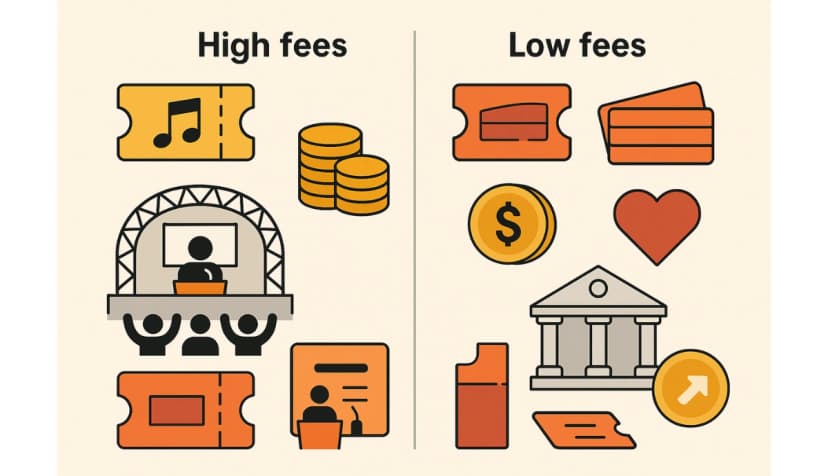
Wondering how fees really impact your earnings? These examples show what event organizers lose—and save—based on the platform they choose.
Even small changes in fees make a big difference. Here’s how using a ticketing platform with lowest ticket fees can put real money back in your hands.
1. Local concert: Don’t let small fees drown out your profits
Imagine you’re hosting a live music show at a cozy 300-seat venue. Tickets are $20 each.
- With a $1.50 fee per ticket, you lose $450 right off the top
- Switch to a ticket site with low fees, charging just $0.30 per ticket, and your total fee drops to $90
- That’s a $360 difference—enough to pay for a sound engineer or rent lighting gear
For small events, every saved dollar counts. Lower fees give you room to deliver a better show without raising ticket prices.
2. Tech conference: Big audience, bigger savings
You’re planning a tech conference with 1,000 attendees, each paying $100.
- A 3% + $1 flat fee means you lose $4,000 on ticketing alone
- Move to a ticket website with lowest fees offering a flat $0.50 per ticket, and you only pay $500
- That’s $3,500 back—enough for a top-tier keynote speaker, branded swag bags, or better Wi-Fi
At scale, small percentage differences create huge budget shifts.
3. Charity event: Every cent matters
Let’s say you’re organizing a fundraiser. You sell 500 tickets at $50 each.
- Even a $0.75 fee per ticket eats $375 of potential donations.
- A ticket app with lowest fees charging $0.25 per ticket brings that down to $125.
- You save $250—funds that go directly to your cause, not a fee.
Across all events (big or small), using low-fee ticket sites protects your bottom line. The savings are real, and they stack up fast.
Pro Tip: Invite a sponsor to underwrite ticket fees for charity galas. Their logo gains visibility, and every saved dollar flows directly to the cause.
FAQs: Ticketing platforms with lowest ticket fees

1. What is the average ticketing platform fee?
Most platforms charge between 3% to 5% per ticket, plus a fixed fee, often around $1. But these numbers add up fast. That’s why many organizers are switching to ticket sites with lowest fees that offer flat pricing models and fewer surprise charges.
2. Are there truly free ticketing platforms?
Some platforms offer no fees for free events or cover basic ticketing needs without cost. However, once you start selling tickets, even “free” platforms often charge for processing, support, or premium features. Always check the full fee breakdown.
3. How do I avoid paying high ticket fees?
Here are a few smart ways:
- Choose a ticket website with lowest fees
- Use your own payment gateway like Stripe or PayPal
- Pass fees to buyers (transparently)
- Offer early-bird pricing to build early sales momentum
Also, using the right strategies to sell event tickets faster and more efficiently can help cover costs and increase your overall revenue.
4. Can I pass ticket fees to buyers?
Yes, many platforms give you the option. Just be clear with your audience so it doesn’t feel hidden. This can help protect your margins, especially for large events or fundraisers.
5. Do lower ticket fees mean fewer features?
Not necessarily, but it depends on the platform. Ticket Generator, for instance, includes QR Code check-in, branded event pages, bulk ticket generation, automated distribution (email/SMS/WhatsApp), and real-time analytics at its standard per-ticket rate. There are no premium tiers for these core features. Compare this with platforms that gate analytics or email delivery behind higher plans, where the 'low fee' on paper becomes a higher effective cost once you add the features you actually need.
The takeaway: How do you keep more from every ticket you sell?
Event profits don’t disappear overnight. They leak through small, hidden fees on every ticket. Choosing a ticketing platform with lowest ticket fees fixes that by giving you clear pricing, predictable costs, and full control over your revenue.
The difference comes down to the model. Flat, transparent pricing with built-in features will always outperform platforms that charge per ticket or gate essentials behind add-ons.
That’s where Ticket Generator stands out. You get zero commission on ticket sales, the ability to use your own payment gateway, and an all-in-one setup. From ticket creation and customizable event pages to QR Code-based validation, bulk ticket generation, automated distribution (email/SMS/WhatsApp), and real-time tracking. No hidden fees. No extra charges for core features.
If you’ve made it this far, the takeaway is simple: Don’t just look for the lowest fee, choose the platform that lets you keep the most money.
With the right setup, every ticket you sell becomes more profitable and every event easier to manage.
About the author
Content Marketer at Ticket Generator
Ashish Chandra has spent 5+ years writing about event technology, covering topics such as ticket design, QR check-ins, attendee management, and event marketing strategy. As the Content Lead at Ticket Generator, Ashish has analyzed hundreds of real-world event workflows and ticketing setups, helping organizers across industries use QR-based tickets, event landing pages, and smarter ticketing systems to run smoother, better-attended events. His writing is shaped by real user needs and the questions organizers ask most often: How do I sell more tickets? How do I avoid chaos at the door? How do I make my next event better than my last? When he steps away from the screen, you'll likely find him hiking a quiet trail or tending his plants- his preferred way to reset.
Latest posts
Check out our latest articles on the blog
 12 min read
Email Marketing for Events and Webinars: What to Send, When to Send It, and How to Automate It
A step-by-step playbook for email marketing for events and webinars. Learn what to send, when to send it, and how to automate every email for in person and virtual events.
Ashish Chandra
18 Oct 2026
 10 min read
Halloween Masquerade Ball: How to Host a Night of Masks and Mystery
From Venetian-inspired masks to QR-coded entry, here is your complete guide to planning a Halloween masquerade ball your guests will talk about for years.
Ashish Chandra
18 Oct 2026
 9 min read
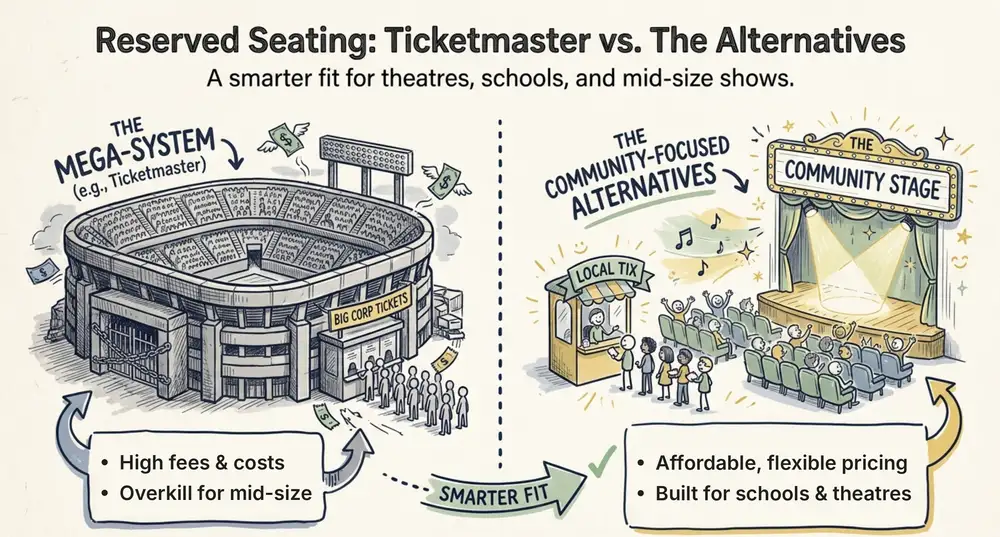
Ticketmaster Reserved Seating: How It Works and a Better Fit for Smaller Events
Ticketmaster reserved seating works well for arenas. If you run a theatre, gala, or mid-size show, see how it works, what it costs, and how to switch.
Ashish Chandra
16 Oct 2026