

PDF Tickets: How To Create Secure, Scannable Event Tickets
 Written byAshish ChandraLast updatedAugust 18, 2026
Key Takeaways:
- PDF tickets are event tickets saved as a PDF file - printable, or shown on a phone.
- A ticket from a design tool is just a picture. One guest forwards it, two people walk in.
- Give every file its own QR code and ticket ID, and you can check it at the door.
- Scanning flags valid, invalid, duplicate, and expired tickets on the spot.
- Ticket Generator puts a unique QR code on every ticket and takes no commission.
PDF tickets are event tickets saved as a PDF file, so guests can print them at home or open them on a phone at the gate. The file type is not what makes them work, though. What makes one usable is what is printed on it: a unique QR code and a unique ticket ID that a scanner can check against your guest list.
Here is the scenario I see most often. An organizer designs a good-looking ticket, exports it, and emails it to 300 guests. Then 340 people turn up at the door.
Nobody committed fraud on purpose. One guest forwarded the file to a friend, and the door team had no way to tell the two apart.
In this guide, I explain what the format is and why organizers still prefer it. I also show where a design-tool export breaks down, and how to make tickets that control who gets in.
What are PDF tickets?
A PDF ticket is an event ticket delivered as a PDF file. It carries the event details, the guest's details, and when built properly, a unique QR code tied to one admission.
The format matters for a practical reason: a PDF looks the same everywhere. The same file opens on an iPhone, an Android tablet, a Windows laptop, and a ten-year-old office printer. The QR code lands in the same spot at the same size every time. That predictability is why box offices, universities, and conference teams still use it.
A well-built one carries:
- Event essentials: name, date, start time, venue, and gate or entrance
- Guest identity: attendee name, plus seat, row, or section where relevant
- A unique QR code: different on every single ticket, not one shared code
- A unique ticket ID: human-readable, so your team can verify by hand if a scan fails
- Ticket category: VIP, General, Early Bird, student, staff
- Your branding: logo, colors, sponsor marks, and no platform watermark
Two of those six items do the security work. The QR code and the ticket ID let a coordinator confirm two things at the door: this exact file went to this exact person, and nobody has used it yet.
Why do organizers still send PDF tickets in 2026?
Organizers still send PDF tickets because the format works when nothing else does. There is no app to install, no account to create, and no signal needed to open the file.
The online event ticketing market reached USD 85.35 billion in 2025 and is projected to hit USD 105.17 billion by 2031, according to Mordor Intelligence. Mobile leads that growth. But "mobile-first" is not the same as "mobile-only."
Every organizer eventually meets the guest whose phone is dead, whose inbox will not load in a basement venue, or who simply prefers paper.
It holds up for four reasons:
- Universal access. Every device opens a PDF. No download, no login, no wallet app.
- Print-friendly. Guests who want something physical can print at home, and you can print a batch for a walk-up counter.
- Offline for the guest. Once downloaded, the file opens with no connection at all.
- Easy to archive. Finance and compliance teams keep a clean record of every ticket issued.
There is a real trade-off, and it is worth naming. A downloaded file cannot be updated after the fact. If your start time moves, guests are holding the old time, so you still need email or SMS to push the change.
That is why many teams send a file and a live digital ticket link, then let each audience pick. It helps to know the full range of types of event tickets before you commit to one.
What is wrong with a PDF ticket made in Canva or Word?
Nothing is wrong with the design. The problem is that a design tool makes one identical file for everyone, and identical files cannot be told apart at the gate.
Walk through what actually happens. You lay out a ticket in Canva, export one file, and email it to your list. Every guest now holds exactly the same file.
Forward it, screenshot it, print it twice. Your door team sees the same thing each time, with no way to know whether it is the first appearance or the fortieth.
Organizers often try to patch this with a free QR generator. That patch creates a subtler version of the same problem.
"The most common mistake we see is organizers using a generic QR generator and realizing that this way every attendee will have the same code. Also, those generators can't help you stop duplicates."
— Anshul Singh Bisht, Head of Event Technology, Ticket Generator
One more correction, because this claim circulates widely: QR codes are not impossible to duplicate. A QR code is a printed pattern, and any camera copies it.
What stops reuse is not the code. It is one-time validation: the first scan marks that ticket used, and every later scan of the same code comes back as Duplicate.
Here is the practical difference:
|
Parameter |
Plain export from a design tool |
QR-coded ticket from a platform |
|---|---|---|
|
Ticket file |
Identical for every guest |
Unique per guest |
|
QR code |
None, or the same code on all tickets |
Unique code + unique ticket ID each |
|
Duplicate entry |
Undetectable |
Flagged instantly on the second scan |
|
Check-in method |
Read the name, search a printed list |
Scan once and read the result |
|
Attendance data |
Manual headcount after the fact |
Live count as guests walk in |
|
Multi-gate events |
Lists get out of sync between doors |
All gates read the same live record |
|
Cost of a mistake |
A stranger sits in a paid seat |
Entry is refused at the door |
Try Ticket Generator to issue tickets that each carry their own QR code, so a forwarded file gets caught at the gate, not discovered later in your revenue report.
How do you create PDF tickets that control entry?
Creating entry-controlling PDF tickets is a two-part process: generate a unique, verifiable ticket for every guest, then validate those tickets at the door. The key is that every PDF needs its own QR code and Ticket ID, so forwarded copies and duplicate scans can be detected.
Here’s how to do it with Ticket Generator:
Part 1: Create verifiable PDF tickets
- Create your event. Sign up and click Create New Event. Add the event name, date, time, venue, and description. This event record becomes the source against which tickets are validated at the gate.
- Set up your ticket categories. Create access or pricing tiers such as VIP, General Admission, Early Bird, Student, or Staff. Each category can have its own ticket configuration.
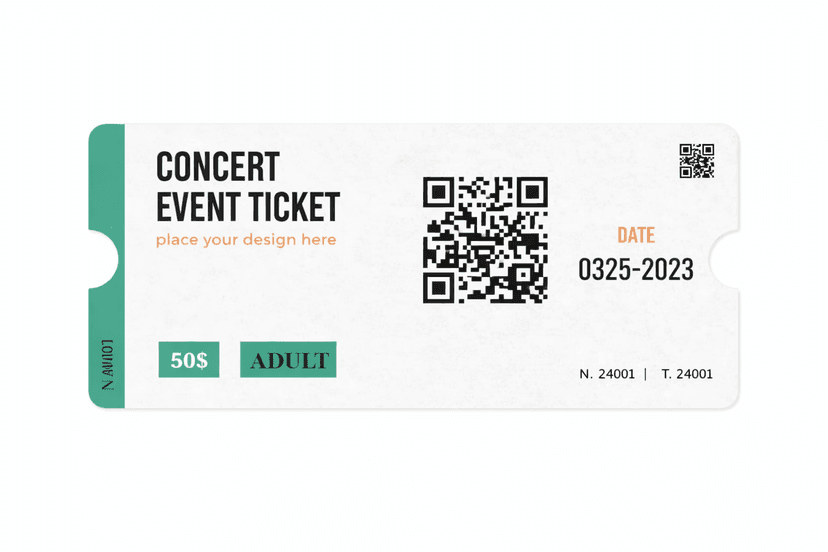
- Design your ticket. Upload your own artwork, start from scratch, or customize a ready-made template. Add variable fields such as guest name, seat, row, section, and Ticket ID. Ticket Generator automatically embeds a unique QR code and Ticket ID on every ticket, including custom designs.
- Add your guest data. Upload a CSV, XLS, or XLSX file for a bulk run, or add guests individually. The platform uses this data to generate personalized tickets at scale.
- Generate the tickets. Click Generate and the platform creates a separate ticket for every guest, with each PDF carrying its own unique QR code. You can download the batch as print-ready PDFs or send the tickets digitally.
- Distribute the tickets. Send tickets by email in batches of up to 1,000, or distribute them via SMS or WhatsApp. You can also issue printable tickets for guests who need a physical copy.
Part 2: Validate the PDFs at the gate
Once the PDFs are generated, the QR code turns each ticket into a checkable credential.
- Add your gate staff as Coordinators. Give each member of your door team access to the specific event they're working on. They can validate tickets without getting access to your broader account or event-management settings.
- Set up the Ticket Validator app. Staff can use the free Ticket Validator app on iOS or Android with a regular smartphone. You can also use the web validator at validate.ticket-generator.com on a laptop or tablet.
- Select the event. Staff log in with their coordinator credentials and select the event. Multiple devices can be used simultaneously, so you can operate several entry points at once.
- Scan the QR code. Staff point the phone's camera at the QR code on the PDF, whether it's displayed on a guest's phone or printed on paper.
- Check the result. The validator immediately tells staff whether the ticket is:
- Valid: Genuine and unused. Admit the guest.
- Invalid: The QR code isn't recognized or doesn't belong to the event.
- Duplicate: The ticket has already been scanned.
- Expired: The ticket is outside its permitted validity period.
- Manage re-entry and multi-day access. Enable re-entry when guests are allowed to leave and return. For multi-day events, configure the ticket accordingly so legitimate passes can be used across the required days.
- Monitor attendance in real time. The dashboard records check-ins and coordinator activity, helping organizers monitor attendance and identify attempted duplicate or unauthorized entries.
The important distinction: the PDF itself doesn't control entry. The unique QR code attached to each PDF does. When staff scan it, the validator checks the ticket against the event's live records to determine whether the ticket is genuine, belongs to that event, and has already been used.
Pro Tip: Test before doors open. Generate a sample ticket and scan it with the Ticket Validator app. Then scan it again to see the Duplicate response. This gives your gate staff a quick rehearsal before the real queue starts. Want PDF tickets that can actually stop duplicate entry? Try Ticket Generator's ticket validation to generate unique tickets and validate them at the door.
If you already run your own registration system, skip the dashboard and generate tickets with code through the Ticket Generator API. Felipe Motta, a food and beverage business in Panama, issued 638+ tickets this way, with 95% generated via API and hit 96% peak attendance.
Pro Tip: Test before doors open. Generate a sample ticket and scan it with the Ticket Validator app. Then scan it again to see the Duplicate response. This gives your gate staff a quick rehearsal before the real queue starts. Want PDF tickets that can actually stop duplicate entry? Try Ticket Generator's ticket validation to generate unique tickets and validate them at the door.
How do you validate a PDF ticket at the gate?
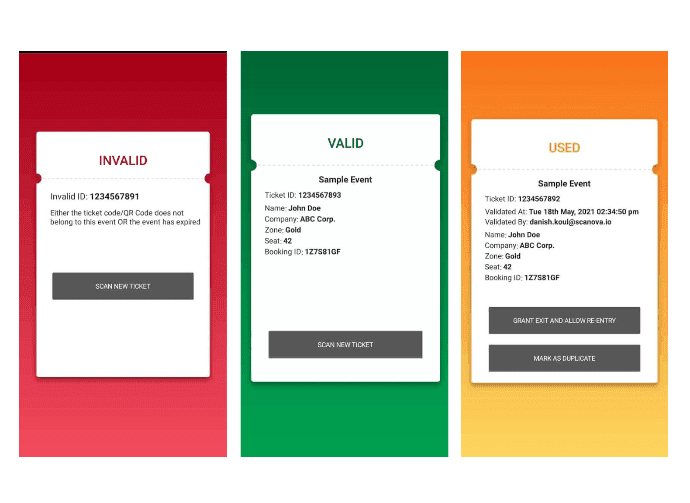
Scan the QR code with a validator app on any smartphone. The scan checks the code against your live event record and returns one of four results.
- Valid - issued, unused, admit the guest
- Invalid - not issued for this event, or switched off
- Duplicate - already scanned, someone is trying to reuse it
- Expired - outside the event's valid window
Setting this up takes three steps:
- Add coordinators to the event from your dashboard. They get event-level access only, never your full account.
- Have them install the Ticket Validator app on Android or iOS and log in with the invite. No dedicated scanning hardware required. There is also a web validator if you would rather run it in a browser.
- Open the event and scan. Several coordinators can scan at several gates at once. Every device reads the same live record, so a ticket used at Gate A is already marked used at Gate B.
One honest limitation: the validator needs an internet connection. It checks each scan against the server in real time, which is exactly what makes duplicate detection work but a venue with no signal needs a backup. Test the connection at your actual entry point during setup, not on the day. If reception at the door is unreliable, add a Wi-Fi hotspot for the scanning team.
Multi-day events reset ticket status at midnight, so a three-day conference pass validates fresh each morning. For the deeper mechanics, see how to add QR codes to event tickets and how QR code tickets work from end to end.
Should you send PDF tickets, digital tickets, or printed tickets?
Send a PDF when guests may want to print, a digital link when your audience is phone-first, and printed tickets when you are selling at a physical counter. Most events end up using two of the three.
|
PDF ticket |
Digital ticket link |
Printed paper ticket |
|
|---|---|---|---|
|
Best for |
Mixed audiences, corporate, campus |
Phone-first, younger audiences |
Walk-up sales, door counters |
|
Guest needs |
Any device or a printer |
A phone with a browser |
Nothing |
|
Works offline for guest |
Yes, once downloaded |
No |
Yes |
|
Content can change after sending |
No |
Yes, it is a live link |
No |
|
Print cost |
Guest's, or yours in batch |
None |
Yours |
|
Scannable entry |
Yes, with a unique QR code |
Yes |
Yes, with a unique QR code |
|
Environmental cost |
Low if guests do not print |
Lowest |
Highest |
The greener option is not automatic. A file that every guest prints is not much better than paper. Antioch University leaned into this deliberately, running QR check-in to cut printing across its events.
How Ticket Generator helps you create secure PDF tickets
Ticket Generator is built for organizers who want branded, scannable tickets without handing a platform a percentage of every sale.
Every ticket you generate gets a unique QR code and a unique ticket ID automatically — including tickets built from your own uploaded artwork. There is no way to accidentally ship 300 identical files, because the platform will not produce them.
For this format specifically, the pieces that matter:
- Design freedom with no watermark. Upload your artwork, edit a template, or generate a design with AI (each request returns four options, and every account starts with five free AI tokens).
- Bulk generation and download. Upload a guest list, generate the whole batch, download every ticket print-ready.
- Multi-channel delivery. Send tickets by email, SMS, or WhatsApp. Email goes out in batches of up to 1,000 guests. You can also schedule a whole batch for a set date, time, and time zone.
- Real validation. Validate tickets on any smartphone, with duplicate detection, re-entry support, and simultaneous multi-gate scanning.
- Live attendance data. Watch check-ins as they happen, see flagged entry attempts, and export the record to Excel or PDF.
On pricing: Ticket Generator runs on credits, not a subscription and not a per-event fee. One credit generates or downloads one ticket, credits never expire, and new accounts start with 10 free.
Packs run from 10 credits at $6 to 10,000 at $2,500. Nonprofits get 30% off, and events using a venue seating layout use 2 credits per ticket. You pay no commission on sales, payments land directly in your own Stripe, PayPal, or Razorpay account.
The platform has issued over 1,000,000 tickets across 30,000+ events in 100+ countries. It is ISO 27001:2022 certified and GDPR-compliant.
Antioch University in Ohio ran 1,700+ tickets across three events on it. Elida Martinez of Antioch University pointed to exactly the two things this article is about: "The ability to check in using a QR Code... and the platform to scan tickets on the phone."
What you gain is a file that looks like your brand. It also works like a ticket only one person can use: one per guest, checked in a moment at the door.
Conclusion
PDF tickets remain the most dependable format in event ticketing. They open on any device and print on any printer. But the format alone buys you nothing at the gate.
An export from a design tool is a picture that copies perfectly, and every copy looks as real as the original.
The fix is not complicated. Generate from a platform that gives each ticket a unique QR code and ticket ID, then scan them at the door. That one change turns a decorative file into a working pass and turns your entry list into live attendance data you can use.
If you want branded tickets that stop duplicates without giving up a cut of your revenue, Ticket Generator handles the whole path from design to gate.
Start with Ticket Generator to create PDF tickets that each carry their own QR code, then scan them at the door in one pass. Your event. Your revenue. Your rules.
FAQs: PDF Tickets
1. What is a PDF ticket?
A PDF ticket is an event ticket delivered as a PDF file, which a guest can print or open on a phone at the gate. A well-built one carries the event details, the guest's name, a unique QR code, and a unique ticket ID. The QR code is what lets your team check it instead of taking the guest's word for it.
2. Can a PDF ticket be scanned?
Yes, as long as each file carries its own unique QR code. Scanning it with a validator app checks the code against your live guest list and returns Valid, Invalid, Duplicate, or Expired. A file with no QR code, or with the same code on every ticket, cannot be meaningfully scanned.
3. How do I stop people from copying my tickets?
You cannot stop the file from being copied, you stop the copy from working. One-time validation marks a ticket used on its first scan, so every later scan of that same code is flagged as a duplicate at the gate. Ticket Generator applies this to every ticket automatically, including ones built from your own custom design.
4. Do guests need to print a PDF ticket?
No. Guests can show the file on their phone screen and the QR code scans directly from the display. Printing is optional, which is why many organizers choose the format, it covers guests who want paper and guests who do not, from one file.
5. Is it free to create tickets in PDF format?
Creating an account is free and includes 10 credits, which generate 10 tickets at no cost. Beyond that, Ticket Generator charges per ticket generated rather than a subscription or a commission on sales. Packs start at $6 for 10 credits, and nonprofits receive a 30% discount.
6. What is the difference between a PDF ticket and an e-ticket?
A PDF ticket is one specific kind of e-ticket, the version delivered as a downloadable file. Other e-tickets are live links or wallet passes that update if event details change. The PDF version trades that flexibility for working offline and printing reliably on any device.
About the author
Content Marketer at Ticket Generator
Ashish Chandra has spent 5+ years writing about event technology, covering topics such as ticket design, QR check-ins, attendee management, and event marketing strategy. As the Content Lead at Ticket Generator, Ashish has analyzed hundreds of real-world event workflows and ticketing setups, helping organizers across industries use QR-based tickets, event landing pages, and smarter ticketing systems to run smoother, better-attended events. His writing is shaped by real user needs and the questions organizers ask most often: How do I sell more tickets? How do I avoid chaos at the door? How do I make my next event better than my last? When he steps away from the screen, you'll likely find him hiking a quiet trail or tending his plants- his preferred way to reset.
Latest posts
Check out our latest articles on the blog
 12 min read
Email Marketing for Events and Webinars: What to Send, When to Send It, and How to Automate It
A step-by-step playbook for email marketing for events and webinars. Learn what to send, when to send it, and how to automate every email for in person and virtual events.
Ashish Chandra
18 Oct 2026
 10 min read
Halloween Masquerade Ball: How to Host a Night of Masks and Mystery
From Venetian-inspired masks to QR-coded entry, here is your complete guide to planning a Halloween masquerade ball your guests will talk about for years.
Ashish Chandra
18 Oct 2026
 9 min read
Ticketmaster Reserved Seating: How It Works and a Better Fit for Smaller Events
Ticketmaster reserved seating works well for arenas. If you run a theatre, gala, or mid-size show, see how it works, what it costs, and how to switch.
Ashish Chandra
16 Oct 2026