

New Year Event Tickets: How to Plan and Sell Tickets That Convert
 Written byAshish ChandraLast updatedJuly 1, 2026
Key Takeaways:
- New Year events attract high demand, so ticketing helps control entry and event planning.
- You can host in-person, virtual, or hybrid New Year events based on your audience.
- Clear ticket pricing and early promotion improve attendance and reduce last-minute issues.
- Using digital tickets and QR-based entry keeps New Year’s events organized and secure.
- Tools like Ticket Generator help you manage ticketing, check-ins, and event data from a single dashboard.
New Year’s Eve is one of the busiest event nights of the year. Clubs, offices, communities, and private hosts all compete for attention on the same night. That is exactly why planning early and managing tickets well matters more than we anticipate.
Whether you are hosting a large party, a company celebration, or a ticketed community event, New Year event tickets help you stay organized. They allow you to control entries, plan your budget, and set clear expectations for guests.
This guide walks you through everything you need to know. You will learn what New Year event tickets are, the types of events you can host, how to price and promote events, and how to manage entry smoothly on the big night.
A. What are New Year event tickets?
New Year event tickets are passes that allow guests to attend a New Year’s Eve or New Year’s Day event. These tickets can be digital or printed and usually include details such as the event date, time, venue, and entry rules.
Ticketed New Year events are common because this time of year attracts high demand. Many people plan celebrations weeks in advance, and popular events often reach capacity quickly.
Tickets help hosts manage attendance, control entry, and plan resources like food, drinks, and staff.
New Year event tickets are used for many types of gatherings. These include club parties, company celebrations, charity events, community meetups, and even private parties with limited seating.
For businesses and organizers, tickets also help set expectations and reduce confusion on the event day.
If you are hosting a New Year event for clients, employees, or the public, your tickets should reflect the experience you are offering.
A formal event may use professionally designed tickets, while a casual gathering may keep things simple. Either way, tickets help bring structure to an otherwise busy night.
B. Types of New Year events you can host
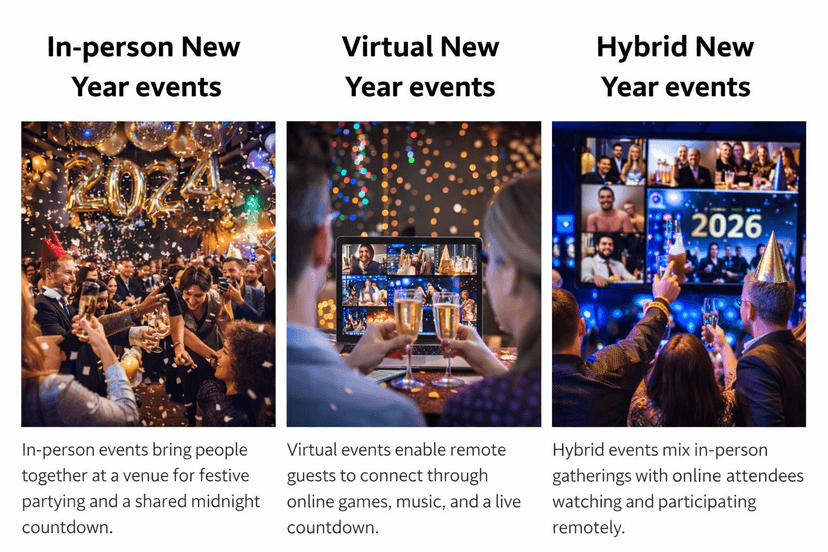
New Year's events come in many formats. The right format depends on your audience, location, and goals for the celebration.
1. In-person New Year events
In-person events are the most popular choice for New Year’s Eve. These events often include music, food, drinks, and a shared countdown at midnight.
Hosts usually book a venue, arrange catering, plan entertainment, and issue New Year event tickets to manage entry.
An in-person event allows guests to connect face-to-face and creates a strong festive atmosphere.
It also gives organizers a chance to show appreciation through speeches, visuals, or small gifts. Because demand is high on New Year’s Eve, tickets are especially useful for avoiding overcrowding and long entry lines.
2. Virtual New Year events
Virtual New Year events are a great option when guests are spread across locations or cannot attend in person. These events may not have the same energy as a physical party, but they still offer meaningful connection during the holidays.
Virtual events work well for remote teams or global communities. Activities like online games, music sessions, virtual karaoke, or live countdowns help keep guests engaged.
Even for virtual events, tickets or registrations help hosts estimate attendance and send reminders.
3. Hybrid New Year events
Hybrid events combine in-person and virtual experiences. Some guests attend at the venue, while others join online. This format has become more common as remote work and digital events grow.
Hybrid New Year events allow you to reach a wider audience without increasing venue size.
Tickets help manage both groups by separating entry types and tracking attendance. This makes the event easier to organize and more inclusive.
C. Why hosting a ticketed New Year event makes sense
New Year events are not just about celebration. They also offer real value for hosts and organizations.
A New Year event helps strengthen relationships. Whether the guests are friends, employees, or customers, coming together at the end of the year builds connection and goodwill. Shared experiences often leave a lasting impression.
Ticketed events also improve engagement. When people purchase or register for tickets, they are more likely to attend and participate. Guests who enjoy the experience often share it on social media, which helps spread awareness naturally.
For companies, New Year events support team bonding and culture. Employees who feel appreciated are more motivated and positive at work. A well-run event sends a strong message that people matter.
Most importantly, New Year events are fun. They bring music, food, laughter, and celebration into one space. Tickets simply help manage the experience so that everyone can enjoy the night without confusion or stress.
D. How to plan a New Year event step by step?

Planning a New Year event can feel overwhelming because there is a lot happening on the same night.
Breaking the process into clear steps makes it easier to manage and helps you avoid last-minute issues.
1. Choose a New Year event theme
The theme sets the tone for your entire event. It influences the venue, food, music, dress code, and even how you design your New Year event tickets.
When choosing a theme, think about your audience first. Adults may enjoy bold or glamorous themes, while family-friendly events need something simpler and more inclusive.
If you are unsure, asking your audience to vote can be a great way to increase interest before the event even begins.
Some popular New Year event themes include masquerade parties, decade-themed parties, and Hollywood-style celebrations. Eco-friendly themes also work well for organizations that value sustainability. A midnight brunch theme is another creative option for guests who prefer food and conversation over loud music.
2. Select the right venue
Your venue choice should match both your guest count and your event theme. A large hall may work for a public or corporate event, while a restaurant or bar may be better for a smaller gathering.
The weather is another important factor. New Year events often take place during winter, so indoor venues are usually safer. Make sure the venue is easy to reach and has enough space for movement, seating, and activities.
It is also important to confirm practical details. Check whether the venue has sound equipment, internet access for virtual elements, and the right permits if alcohol is involved. These details help prevent surprises on the event day.
3. Plan games and entertainment

Entertainment keeps energy high throughout the night. Music plays a key role in almost every New Year event, whether it comes from a DJ, a live band, or a curated playlist.
You can also add simple activities to keep guests engaged. Trivia games, karaoke, photo booths, or a group countdown create shared moments that people remember.
Choose activities that fit your audience and avoid overloading the schedule. A few well-timed moments are better than constant stimulation.
4. Decide on food and drinks

Food is one of the most memorable parts of any New Year event. The type of food you serve should match the timing and style of your event.
For evening parties, small plates or food stations work well. They allow guests to move around and socialize.
For late-night or midnight events, comfort foods and desserts are often a hit. If your event is virtual, sending food kits or vouchers can help guests feel included.
Always consider dietary needs. Offering vegetarian and alcohol-free options ensures everyone feels welcome.
5. Set your budget early

Your budget guides almost every decision, from venue size to ticket pricing. Start by estimating your main costs, such as space, food, entertainment, and staffing.
If your goal is to cover costs or raise funds, ticket sales will play a big role. Sponsorships or brand partnerships can also help reduce expenses.
Local vendors are often open to collaboration, especially during the holiday season. A clear budget helps you stay realistic and prevents overspending close to the event date.
6. Create your New Year event tickets
Once the basics are in place, it is time to create your New Year event tickets.
Tickets should clearly show the event name, date, time, venue, and any special details guests need to know.
Well-designed tickets also build excitement. Even simple digital tickets can feel special when they match the event theme. Clear ticket details reduce confusion and make entry smoother on the event day.
7. Decide on ticket pricing
Ticket pricing should reflect the experience you are offering. Consider your total costs and how many guests you expect. From there, decide whether your goal is to break even, raise funds, or make a profit.
Many organizers use early-bird pricing to encourage early bookings. You can also offer different ticket types, such as general entry and VIP access. Clear pricing helps guests decide faster and reduces last-minute questions.
8. Promote your New Year event
Promotion is what turns planning into attendance. Start promoting as early as possible, since many New Year events compete for attention.
Use social media posts, event pages, and email messages to share details.
A single page with all event information makes it easier for people to understand what they are signing up for. Consistent reminders help keep your event top of mind as the date approaches.
Strong promotion, paired with clear New Year event tickets, increases your chances of selling out.
E. How Ticket Generator helps you manage New Year event tickets smoothly
New Year’s Eve is one of the busiest event nights of the year. Many events happen at the same time, guests arrive close to midnight, and entry queues can quickly get chaotic. This is where having a simple ticketing system makes a real difference.
Ticket Generator helps you manage New Year event tickets without adding complexity to your planning. It focuses on the parts that usually cause stress, such as registrations, ticket delivery, and entry validation.
Instead of juggling spreadsheets, messages, and manual checklists, you can handle everything in one place. This gives you better control before the event and a smoother experience on the night itself.
How to create New Year event tickets using Ticket Generator
Creating New Year event tickets with Ticket Generator is a simple process. You do not need technical skills or long setup time.
Step 1: Sign up or log in
Start by signing up on Ticket Generator. If you already have an account, log in to your dashboard. This is where you will manage your events and tickets.
Step 2: Create a new event
From the dashboard, create a new event and enter basic details such as the event name, date, time, and location. For New Year events, it helps to clearly mention whether the event is on December 31st or January 1st and what time entry begins.
Step 3: Set up your New Year event tickets
Next, create your ticket types. You can set up general entry tickets, early-bird tickets, or VIP tickets if needed. Each ticket can have its own price, quantity limit, and description. This makes it easy to manage different guest experiences.
Step 4: Customize your event page
Ticket Generator lets you customize your event registration page. You can add your event branding, write a short description, and include important information such as dress code or age limits. This helps guests know exactly what to expect before they book.
Step 5: Share tickets with your audience
Once your event is live, you can share the event link through social media, email, or messaging apps. Guests can register and receive their New Year event tickets digitally, which reduces last-minute confusion.
Step 6: Manage entry with QR-based check-in
On the day of the event, each ticket comes with a QR code. Your team can scan tickets using their smartphones to validate entry. This helps prevent duplicate entries and keeps queues moving quickly, even during peak arrival times.
Why this matters for New Year events
New Year events move fast. Guests often arrive in large groups and close to midnight. Digital tickets and QR-based check-ins help you stay in control without slowing things down.
Ticket Generator also gives you a clear view of attendance. You know how many tickets were issued, how many guests arrived, and when peak entry happened. This insight is useful for planning future events and improving the experience next year.
Most importantly, the system stays in the background. Your guests enjoy the celebration, and you spend less time managing logistics.
Wrapping up: plan less, celebrate more
New Year events happen on one of the busiest nights of the year. Guests arrive at the same time, expectations are high, and small mistakes can quickly turn into big problems. That is why planning early and managing tickets properly matters.
New Year event tickets help you stay organized. They give you control over attendance, pricing, and entry flow. They also make the experience clearer for guests, from the moment they book to the moment they walk in.
If you want a calm and smooth New Year event, focus on what matters most. Set clear plans. Use simple tools. Let technology handle logistics so you can enjoy the celebration.
Ticket Generator helps you do exactly that. It supports you quietly in the background while you focus on hosting a memorable New Year event.
Create your New Year event tickets today and start the year organized, confident, and stress-free.
Frequently asked questions about New Year event tickets
1. What are New Year event tickets?
New Year event tickets are passes that allow guests to attend a New Year’s Eve or New Year’s Day event. They usually include the event date, time, venue, and entry details. Tickets help hosts manage attendance and keep events organized.
2. Do I need tickets for a New Year party?
Tickets are not required for small private gatherings. However, tickets are strongly recommended for public, corporate, or large New Year events. They help control entry, avoid overcrowding, and plan food and staff more accurately.
3. How do I price New Year event tickets?
New Year event ticket prices depend on your costs, venue, and audience. Many hosts offer early-bird pricing to encourage early bookings. You can also create different ticket types, such as general entry and VIP, to match different guest expectations.
4. When should I start selling New Year event tickets?
It is best to start selling New Year event tickets at least four to six weeks in advance. Early sales help you estimate attendance and promote your event more effectively. Popular New Year events often sell out before the final week.
5. Can I use digital tickets for New Year events?
Yes, digital tickets work very well for New Year events. They are easy to share, reduce printing costs, and speed up entry at the venue. QR-based digital tickets are especially useful during peak arrival times.
6. How do I manage entry on a busy New Year’s Eve?
The easiest way to manage entry is by using digital tickets with QR codes. Staff can scan tickets using smartphones, which reduces waiting time and prevents duplicate entry. This keeps queues moving even when many guests arrive at once.
About the author
Content Marketer at Ticket Generator
Ashish Chandra has spent 5+ years writing about event technology, covering topics such as ticket design, QR check-ins, attendee management, and event marketing strategy. As the Content Lead at Ticket Generator, Ashish has analyzed hundreds of real-world event workflows and ticketing setups, helping organizers across industries use QR-based tickets, event landing pages, and smarter ticketing systems to run smoother, better-attended events. His writing is shaped by real user needs and the questions organizers ask most often: How do I sell more tickets? How do I avoid chaos at the door? How do I make my next event better than my last? When he steps away from the screen, you'll likely find him hiking a quiet trail or tending his plants- his preferred way to reset.
Latest posts
Check out our latest articles on the blog
 12 min read
Email Marketing for Events and Webinars: What to Send, When to Send It, and How to Automate It
A step-by-step playbook for email marketing for events and webinars. Learn what to send, when to send it, and how to automate every email for in person and virtual events.
Ashish Chandra
18 Oct 2026
 10 min read
Halloween Masquerade Ball: How to Host a Night of Masks and Mystery
From Venetian-inspired masks to QR-coded entry, here is your complete guide to planning a Halloween masquerade ball your guests will talk about for years.
Ashish Chandra
18 Oct 2026
 9 min read
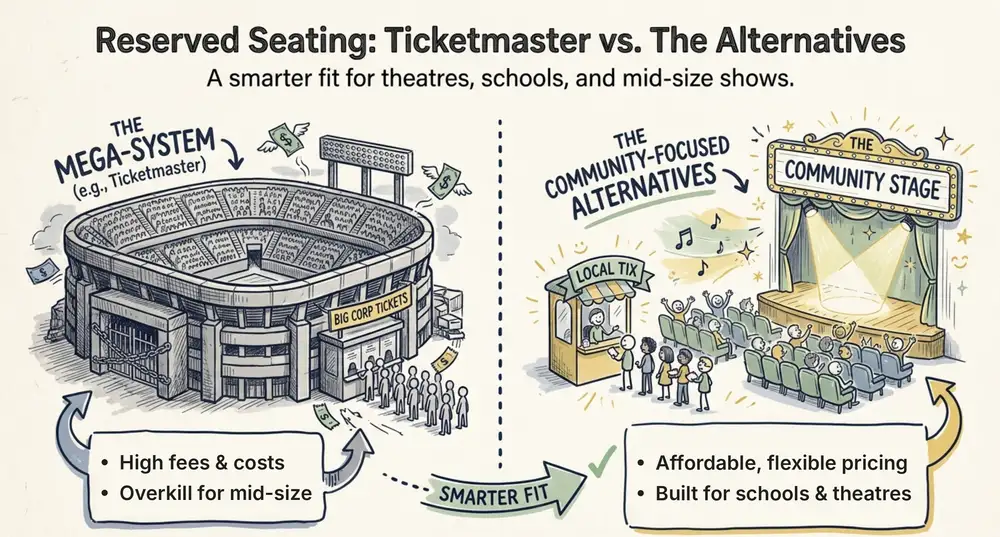
Ticketmaster Reserved Seating: How It Works and a Better Fit for Smaller Events
Ticketmaster reserved seating works well for arenas. If you run a theatre, gala, or mid-size show, see how it works, what it costs, and how to switch.
Ashish Chandra
16 Oct 2026