

After Comparing 15+ Platforms, I Found the Best Low-Fee Ticketing Sites
 Written byAshish ChandraLast updatedSeptember 8, 2026
Key Takeaways:
- Low-fee ticketing sites are not always the cheapest. Hidden fees can quietly raise costs.
- Many platforms claim to be low-cost or free, but service fees, processing fees, or payout delays still apply.
- The cheapest option depends on your event and audience—payment control matters.
- This guide compares low-fee platforms and shows how to keep more revenue without losing speed or security.
Ticketing fees are one of the highest hidden costs of running events. They often go unnoticed at first.
A small “service fee” on paper can add up fast. Once platform commissions, payment processing, and payout delays are included, fees can reach 10 – 15% of ticket revenue.
According to Stripe, payment processing alone often costs around 2.9% + $0.30 per transaction. This applies before any platform takes its cut.
That’s why many organizers now look for low-fee ticketing sites. Not just cheaper tools, but platforms with predictable pricing, faster payouts, and fewer surprises
In this guide, I’ll break down:
- Which ticket sites truly have the lowest fees
- The cheapest way to sell tickets online by event type
- And how to avoid hidden costs without going “fully DIY”
A. What “low-fee ticketing sites” really mean (and what they don’t)
Low-fee ticketing sites don’t always mean cheaper ticketing. In most cases, they simply shift costs to other places. These could be checkout fees, percentage cuts, or delayed payouts. So, the actual total cost only becomes clear after tickets start selling.
Here’s what usually gets missed:
1. Fees often show up later, not upfront
Many platforms look affordable on pricing pages, but add service fees at checkout. They might charge extra for basics like QR Code check-ins, or pass fees to attendees.
This hurts conversions and trust. So even if a platform looks cheap upfront, the total cost per ticket can still be high.
Did you know? Hidden ticketing fees can raise event prices by up to 41%. This cuts into your profits and also hurts attendees’ trust.
Source: The Guardian
2. Small percentage fees scale fast
A 5–10% cut feels minor at setup. After a few hundred tickets, it turns into a significant revenue loss that most organizers only calculate too late.
3. Payment processing fees (almost always unavoidable)
Even “free” ticketing platforms still rely on payment gateways. Most online card payments typically cost around 2.9% + a small fixed amount per transaction, depending on the gateway and region. This fee goes to:
- Stripe
- Razorpay
- PayPal
- Or your chosen payment processor
Important Note: No ticketing platform can eliminate this fee. They can only decide whether they add their own commission on top of it.
4. Delayed payouts create hidden costs
When payouts are slow, organizers cover marketing, vendor, or venue costs out of pocket. There’s no visible fee, but the cash-flow impact is real.
5. “No-fee” usually means trade-offs
No platform commission often comes with manual work, limited features, or poor check-in experiences. That may work for small events, but not for professional or recurring ones.
So what does low-fee actually mean? No commission on ticket sales, clear pricing, no checkout surprises, fast payouts, and essential features included by default. If you don’t understand the full cost before selling your first ticket, the platform isn’t truly low-fee, just low on transparency.
B. Why do ticketing fees feel higher than what platforms advertise?
Ticketing platforms don’t usually lie about fees. They just don’t show the full cost in one place.
What looks affordable on a pricing page often feels expensive once tickets start selling.
Why? First, many fees only appear at checkout. Attendees see a higher final price, while organizers deal with drop-offs and complaints. Even if organizers don’t pay those fees directly, sales still take the hit.
Second, percentage fees feel small, until volume kicks in. After a few hundred tickets, organizers finally add things up and realize how much revenue slipped away.
Third, delayed payouts create hidden costs. When money arrives late, organizers cover marketing, vendors, or venue deposits out of pocket.
The real problem isn’t one big fee. It’s unpredictability.
When costs are split across platforms, checkout, and payout rules, margins become hard to estimate. And that uncertainty is what makes a platform feel expensive, long before the first ticket sells.
C. Ticketing platforms with the lowest fees: My top picks
Instead of asking whether a platform is free, it is more useful to ask whether the pricing is predictable.
A commission-free platform often costs less over time. Payment processing is kept separate. Core features are included from the start.
You know the cost before selling the first ticket. Nothing changes mid-event. That kind of predictability is what most organizers want when they search for low-fee ticketing sites.
So the goal is simple. Compare platforms based on how they charge in real use. Not how good their pricing page looks.
To keep this useful, this comparison focuses on:
- How fees are calculated
- Who ends up paying them
- How predictable is the total cost is
No hype. No “best for everyone” claims. Let’s start.
1. Eventbrite
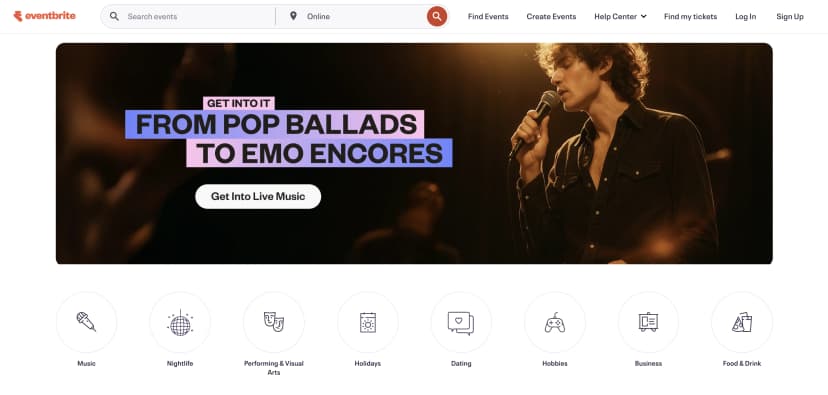
What it is: A large, marketplace-driven ticketing platform. It focuses on public event discovery.
Fees: Eventbrite charges a per-ticket service fee. Payment processing is included. Fees vary by region and event type. They are often passed to attendees at checkout. As ticket sales grow, total costs rise.
Pros: Eventbrite is strong for public events where discovery matters. It handles large volumes well and is familiar to most attendees.
Cons: Fees increase with sales. Branding control is quite limited. Payouts are often delayed. Pricing is hard to predict upfront.
Best for: Public events that rely on marketplace discovery.
2. Ticket Generator
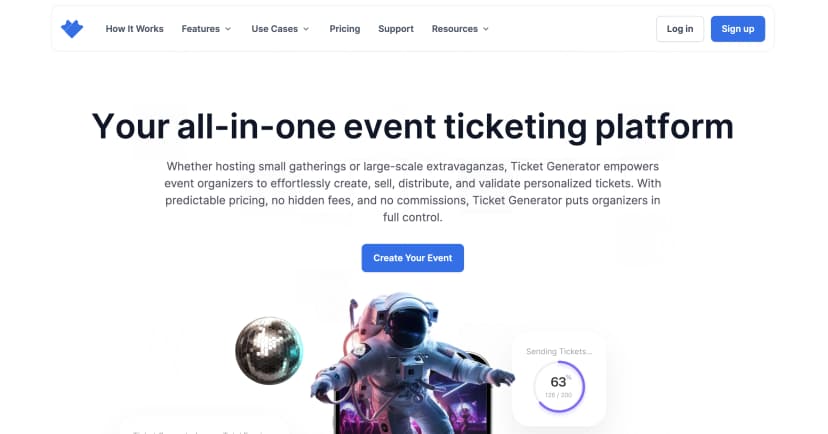
What it is: A modern ticketing platform built for predictability and operational control.
Fees: Ticket Generator does not charge commissions on ticket sales. Organizers pay a clear, usage-based fee for ticketing. Payment processing goes directly to the connected gateway. Costs do not increase as sales grow.
Pros: Predictable pricing. Instant settlements through your own gateway. Full branding control. Customize ready-made templates. Secure QR Code tickets and fast check-ins included.
Cons: Not designed for marketplace-style event discovery.
Best for: Organizers who promote their own events. Teams that want to keep 100% of ticket revenue without sacrificing features or control.
3. TicketTailor
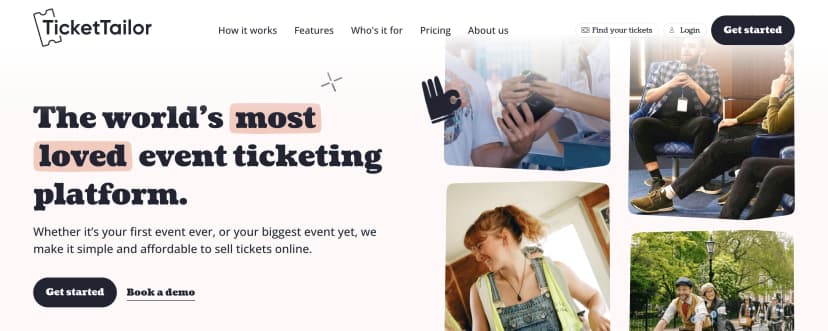
What it is: A popular Eventbrite alternative. It is known for its simple setup and flat pricing.
Fees: TicketTailor charges a flat fee per ticket sold. Payment processing fees apply separately via Stripe or PayPal.
Pros: Simple pricing. Good customization. No percentage-based commission.
Cons: Costs grow linearly with volume. Payouts depend on the payment gateway. Limited access control and reporting.
Best for: Creators and small teams running paid events who want to avoid percentage commissions.
4. Eventzilla
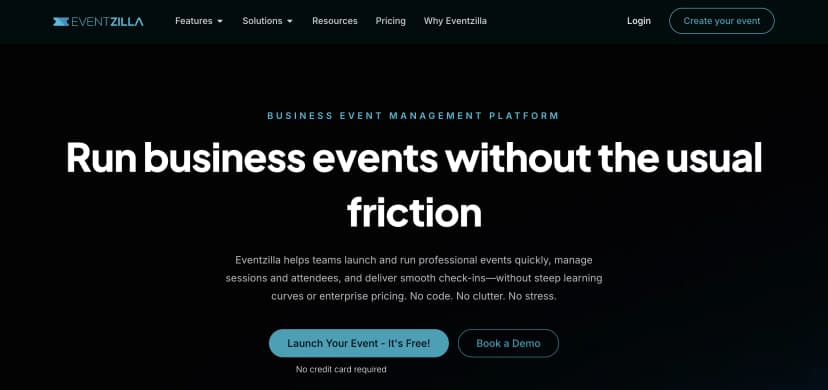
What it is: A US-based event registration and ticketing platform. Commonly used for conferences and training.
Fees: Eventzilla offers per-ticket pricing and subscription plans. Payment processing fees apply separately.
Pros: Flexible pricing options, strong registration tools, and integrations for business events.
Cons: Pricing becomes complex as features increase. Costs can rise for recurring or high-volume events.
Best for: Corporate and professional events that need structured registration and reporting.
5. Dryfta
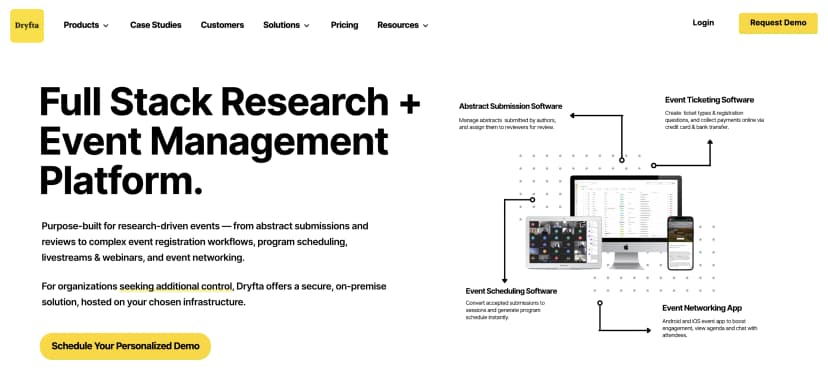
What it is: A conference and event management platform for universities, nonprofits and associations.
Fees: Dryfta offers two pricing paths. If you connect your own payment gateway, costs can be as low as a flat per-transaction fee. If you use Dryfta’s payment processing, the combined service and card fees are higher and charged per transaction.
Pros: Flexible payment setup. Transparent compared to marketplaces. Good for conferences.
Cons: More complex to set up. Not ideal for quick or simple events.
Best for: Conferences and nonprofits with dedicated teams and their own merchant accounts.
6. Tickets Candy
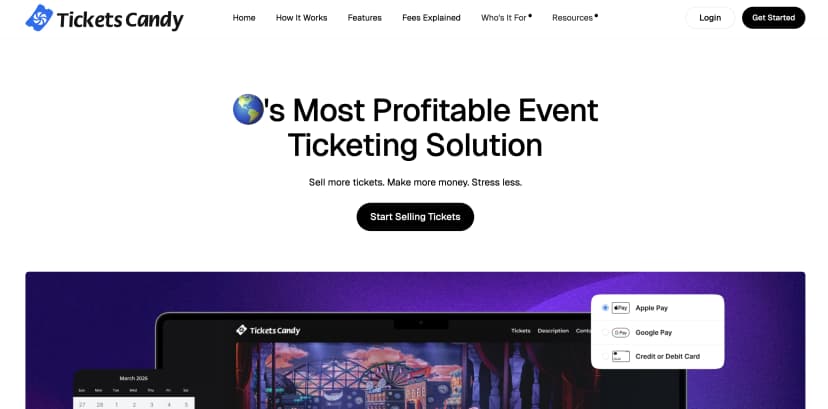
What it is: A ticketing platform positioned around low service fees and fast payouts.
Fees: TicketsCandy charges a small percentage-based service fee. Payment processing fees apply separately.
Pros: Lower headline fees. Faster access to funds.
Cons: Limited feature depth. Basic customization.
Best for: Simple paid events where payout speed matters.
7. Eventbee

What it is: A long-running ticketing platform focused on straightforward, budget-friendly pricing.
Fees: Eventbee charges a flat fee per ticket sold, plus a small booking fee often passed to attendees. Payment processing fees apply separately, and funds typically settle within several days.
Pros: Transparent pricing and support for multiple ticket types and seating.
Cons: The interface feels dated, daily payouts are not available, and setup can feel heavy for smaller teams.
Best for: Conferences and seminars where organizers are comfortable with a more complex interface.
8. Townscript / BookMyShow
What they are: Popular ticketing platforms built around event listings and audience reach.
Fees: Both platforms charge per-ticket commissions, usually combined with payment processing fees. The total cost scales directly with ticket sales, and payouts are often settled after a delay.
Pros: Strong local reach and familiarity. Useful if visibility within their ecosystem is a priority.
Cons: Commissions reduce margins. Branding is platform-first. Organizers have limited control over pricing, presentation, and settlements.
Best for: Large public events where built-in audience reach outweighs margin concerns.
9. Activity Messenger

What it is: A community-focused platform that combines ticketing with communication tools.
Fees: Charges a low platform fee per ticket, with payment processor fees applied separately. Some regions support fee-free payment methods, which can reduce total cost.
Pros: Strong communication features, built-in email and SMS, and good engagement tools.
Cons: Best suited to specific regions and use cases; not optimized for fast, brand-first ticketing flows.
Best for: Community organizers who value communication and follow-up as much as ticket sales.
So, which ticketing platform has the lowest fees?
- The best low-fee ticketing site is Ticket Generator.
- Platforms like Eventbrite or BookMyShow reduce upfront friction but take a percentage of every ticket sold. That works if marketplace discovery is your priority and margins are secondary.
- Others like TicketsCandy or Dryfta promote zero commissions, but often limit features or struggle to scale smoothly for larger events.
- Ticket Generator avoids both extremes. It offers predictable pricing with no per-ticket commission surprises. You know your cost before launch, and it stays the same even if your event sells out.
- This brings down the the average price down to $0.60 per ticket.
|
Platform |
Pricing model |
Commission on ticket sales |
Effective price per ticket |
Cost predictability |
Margin control |
Best suited for |
|---|---|---|---|---|---|---|
|
Ticket Generator |
Credit-based, upfront pricing |
No |
$0.60 per ticket (fixed) |
Very High |
Full control (keep 100% of ticket revenue) |
Professional events focused on predictable costs and higher margins |
|
Eventbrite |
Per-ticket + service fees |
Yes |
~3.7% + $1.79 per ticket |
Low |
Reduced (fees scale with ticket sales) |
Public, discovery-led events |
|
Townscript / BookMyShow |
Per-ticket percentage + fixed fee |
Yes |
~2–3% + fixed fee per ticket |
Low |
Reduced (revenue-share model) |
Large public events |
|
TicketsCandy |
Low percentage service fee |
No platform commission |
~0.9% service fee |
Medium |
Moderate (feature limits may apply) |
Simple paid events |
|
Dryfta |
Subscription-based |
No |
Varies by subscription tier (~$1.80+ per ticket equivalent) |
Medium |
Moderate (tier-based access) |
Conferences & expos |
Note: Payment gateway fees (Stripe, PayPal, Razorpay, etc.) apply separately across all platforms.
The Takeaway: There is no universally “cheapest” ticketing platform. The real question is: Do fees increase because your event is successful, or do they stay stable Low-fee ticketing sites that keep pricing stable tend to feel cheaper over time, even if they are not technically free.
D. The cheapest way to sell tickets online (based on your event type)
The cheapest way to sell tickets online depends less on the platform itself and more on how your event works. A low-cost tool for one event type can become expensive or inefficient for another.
Below are the most common scenarios and what “cheap” actually looks like in each.
1. Internal, corporate, or invite-only events
These events usually have a known audience and no need for public discovery. The main costs come from setup time, coordination, and entry management rather than marketing reach. The cheapest approach here is a platform that:
- Does not charge commissions on ticket sales
- Lets you control who registers and attends
- Includes QR-based check-ins without add-ons
Paying a small, predictable fee upfront is often cheaper than losing time and control with manual tools.
2. Workshops, classes, and training programs
These events tend to be recurring and moderately priced. Small percentage fees may look fine for a single session, but they add up quickly across multiple runs. In this case, the cheapest option is usually a platform where:
- Costs stay the same as volume increases
- Ticket tiers and repeats are easy to manage
- Payments settle quickly
Predictable pricing matters more than a “free” label when the event repeats every month.
3. Public paid events
For concerts, shows, or large public events, some organizers accept higher fees. They do this for built-in discovery and audience reach. This makes sense when:
- You rely on platform traffic
- The marketplace handles most of the marketing
If you already promote your events, commission-based platforms usually cost more over time.
4. Nonprofits and community events
Budget constraints are real here, but reliability still matters. The cheapest setup is usually one that:
- Avoids per-ticket commissions
- Supports free and paid tickets together
- Keeps entry smooth without extra staff
Even small savings per ticket can have a meaningful impact when margins are tight.
A pattern worth noticing: Across all event types, the cheapest option is rarely the one with the loudest “free” claim.
It’s usually the platform that:
- Charges clearly
- Scales without penalty
- Does not surprise you after sales begin
This is why many organizers move away from commission-based pricing. Once they understand their event economics, the fees no longer make sense.
E. How to choose a low-fee ticketing platform?
Low-fee ticketing is not about finding the cheapest-looking platform. It’s about avoiding costs that appear only after tickets start selling.
In those cases, commissions only reduce margins.“No-fee” tools can work for simple or free events. For paid or recurring events, a lack of structure often adds risk and extra work.
Before choosing a platform, ask:
- Will fees increase if sales grow?
- Can I estimate the total cost before launch?
- Do I control payments and payouts?
- Are check-ins and basic reports included?
When pricing is stable and roles are clear, a platform feels cheaper over time. Even if it is not technically free.
F. Why Ticket Generator often become the final choice?
After comparing fee models, a clear pattern emerges. Most frustration does not come from one big fee. It comes from costs changing mid-event, delayed payouts, or missing basic features.
This is why many organizers move toward tools like Ticket Generator.
Instead of taking a cut from every ticket, Ticket Generator separates ticketing from payments. Organizers pay a clear, usage-based fee for ticketing. Payments go directly through their own gateway. As ticket sales grow, costs stay the same.
That predictability makes the difference. Teams know the cost before launch. They know when funds will arrive. They know how entry will work on event day.
Ticket Generator is also not a marketplace. There are no competing events. No platform branding taking over. No reliance on discovery algorithms.
For organizers who already promote their events, this setup feels simpler. It is more controlled. And it often costs less over time.
It may not suit discovery-led events. But for professional, recurring, or brand-led events, this is usually where comparisons converge.
Conclusion: Low-fee ticketing usually comes down to predictability
After comparing low-fee ticketing sites, one thing becomes clear: the real problem isn’t paying a fee, it’s not knowing what you’ll end up paying.
Platforms that charge commissions or layer fees at checkout often look affordable at first. But as ticket sales increase, costs rise, payouts slow down, and margins shrink. That uncertainty is what pushes many organizers to rethink their setup after just one or two events.
This is why tools like Ticket Generator stand out in practice. By removing ticket-sale commissions and keeping pricing usage-based, organizers know their costs upfront. Payments go directly through your own gateway. Funds settle faster. Ticket revenue stays intact, no matter how well the event performs.
FAQs: Best Low-Fee Ticketing Sites
1. Which ticket site has the lowest fees?
There is no single lowest-fee platform for every event. But platforms that do not take a percentage of ticket sales usually cost less over time. Tools like Ticket Generator follow this model, so costs stay stable as sales grow.
2. What is the cheapest way to sell tickets online?
The cheapest option is often to avoid commission-based pricing. If you already promote your event yourself, paying a percentage on every ticket rarely makes sense. In those cases, a commission-free platform like Ticket Generator is usually cheaper.
3. Are there ticket-selling sites with no fees at all?
Payment processing fees almost always apply. The key difference is whether the platform adds its own commission on top. Ticket Generator does not take a cut from ticket sales, which is why many see it as a practical, no-fee option for ticketing itself.
4. Do low-fee ticketing platforms affect ticket conversions?
Yes. Extra fees at checkout can confuse buyers and reduce conversions. With Ticket Generator, ticket prices stay clean and predictable, which helps maintain trust.
5. Are payment gateway fees unavoidable?
Yes. Card processors charge transaction fees regardless of the ticketing tool. With Ticket Generator, these fees go directly to your payment gateway, without an extra platform commission.
6. Which ticket platform is best for predictable pricing?
Platforms that separate ticketing software from ticket revenue are usually the most predictable. Ticket Generator is built this way, so organizers know the cost before selling the first ticket.
7. Is a commission-free ticketing platform always better?
Not always. If you rely on marketplace discovery, paying commissions can make sense. Commission-free platforms like Ticket Generator usually offer better margins. You also get faster payouts and more control.
About the author
Content Marketer at Ticket Generator
Ashish Chandra has spent 5+ years writing about event technology, covering topics such as ticket design, QR check-ins, attendee management, and event marketing strategy. As the Content Lead at Ticket Generator, Ashish has analyzed hundreds of real-world event workflows and ticketing setups, helping organizers across industries use QR-based tickets, event landing pages, and smarter ticketing systems to run smoother, better-attended events. His writing is shaped by real user needs and the questions organizers ask most often: How do I sell more tickets? How do I avoid chaos at the door? How do I make my next event better than my last? When he steps away from the screen, you'll likely find him hiking a quiet trail or tending his plants- his preferred way to reset.
Latest posts
Check out our latest articles on the blog
 12 min read
Email Marketing for Events and Webinars: What to Send, When to Send It, and How to Automate It
A step-by-step playbook for email marketing for events and webinars. Learn what to send, when to send it, and how to automate every email for in person and virtual events.
Ashish Chandra
18 Oct 2026
 10 min read
Halloween Masquerade Ball: How to Host a Night of Masks and Mystery
From Venetian-inspired masks to QR-coded entry, here is your complete guide to planning a Halloween masquerade ball your guests will talk about for years.
Ashish Chandra
18 Oct 2026
 9 min read
Ticketmaster Reserved Seating: How It Works and a Better Fit for Smaller Events
Ticketmaster reserved seating works well for arenas. If you run a theatre, gala, or mid-size show, see how it works, what it costs, and how to switch.
Ashish Chandra
16 Oct 2026