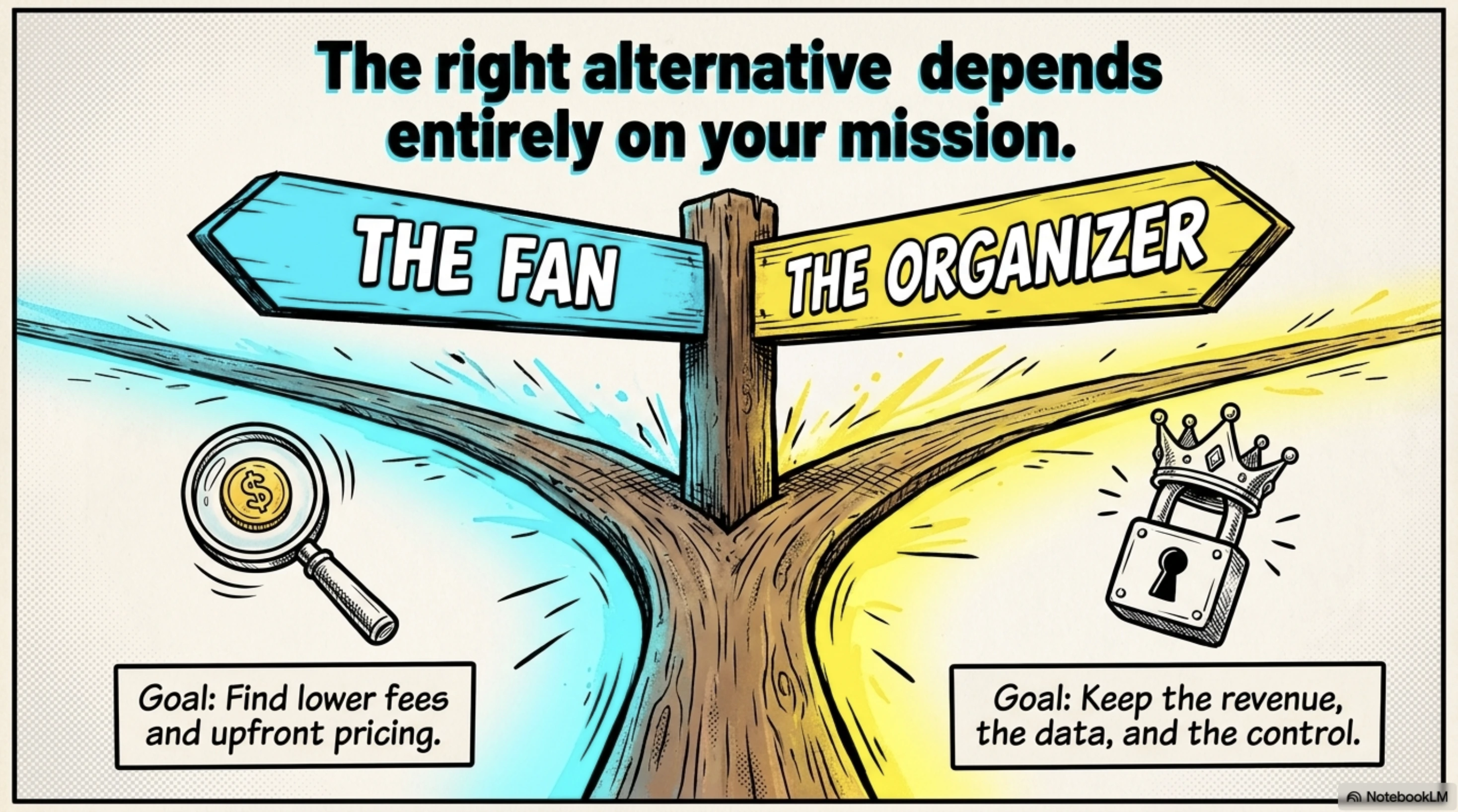
Key Takeaways: The best StubHub alternative depends on who you are: a fan buying resale tickets or an organizer selling your own. StubHub is a resale marketplace that charges fees on both sides, roughly 28% for buyers and about 15% for sellers, by most industry estimates. Buyers often save with lower-fee resale sites like TickPick, SeatGeek, or Gametime. Organizers usually do better by selling directly and avoiding marketplace markups altogether. Ticket Generator lets organizers issue QR tickets, set their own prices, and keep 100% of ticket revenue with zero commission.
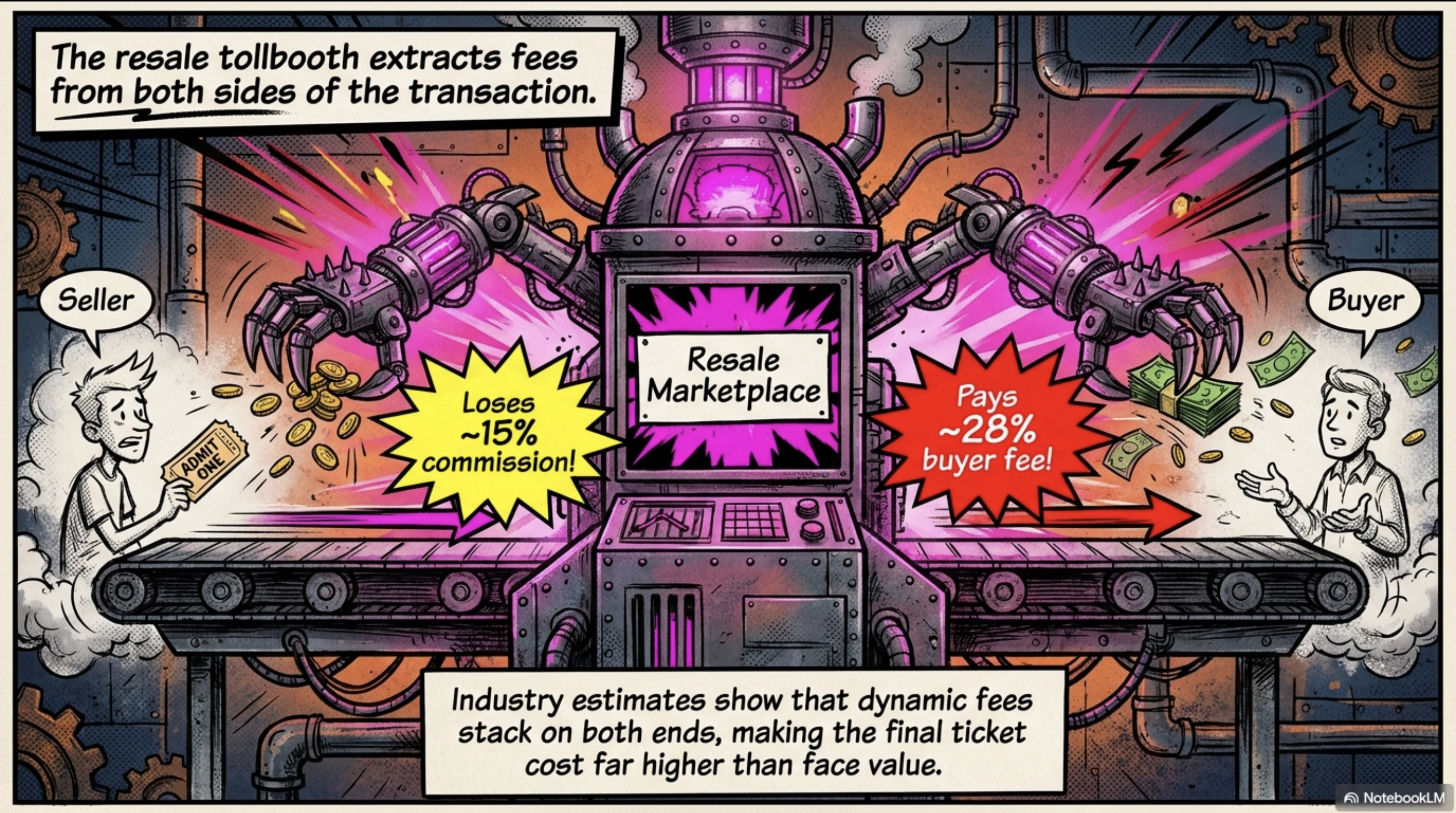
Here is something most ticket buyers never notice: when you buy a resale ticket on StubHub, the platform earns money from both sides of the deal. The seller pays a commission, and you pay a service fee on top of the listed price. Add them together, and the platform can collect a meaningful slice of every transaction.
Did You Know? According to the U.S. Federal Trade Commission (2025), consumers facing hidden or "drip" fees pay upward of 20% more than they would if the full price were shown upfront. Source:
FTC's Junk Fees Rule.
So if you are searching for a StubHub alternative, the honest answer is: it depends on who you are. If you are a fan, the goal is a marketplace with lower fees and clearer pricing.
If you host events, the smarter alternative is not another resale site at all, it is selling your tickets directly, so no marketplace sits between you and your audience taking a cut.
In this guide, I'll explain what StubHub actually is and why people look elsewhere. I'll compare the best resale alternatives for buyers, then break down why organizers need a different kind of platform, and how a direct online ticketing system changes the math. StubHub sits among the larger event ticketing platforms, so it helps to see where it fits before you switch.
What is StubHub, and why look for an alternative?
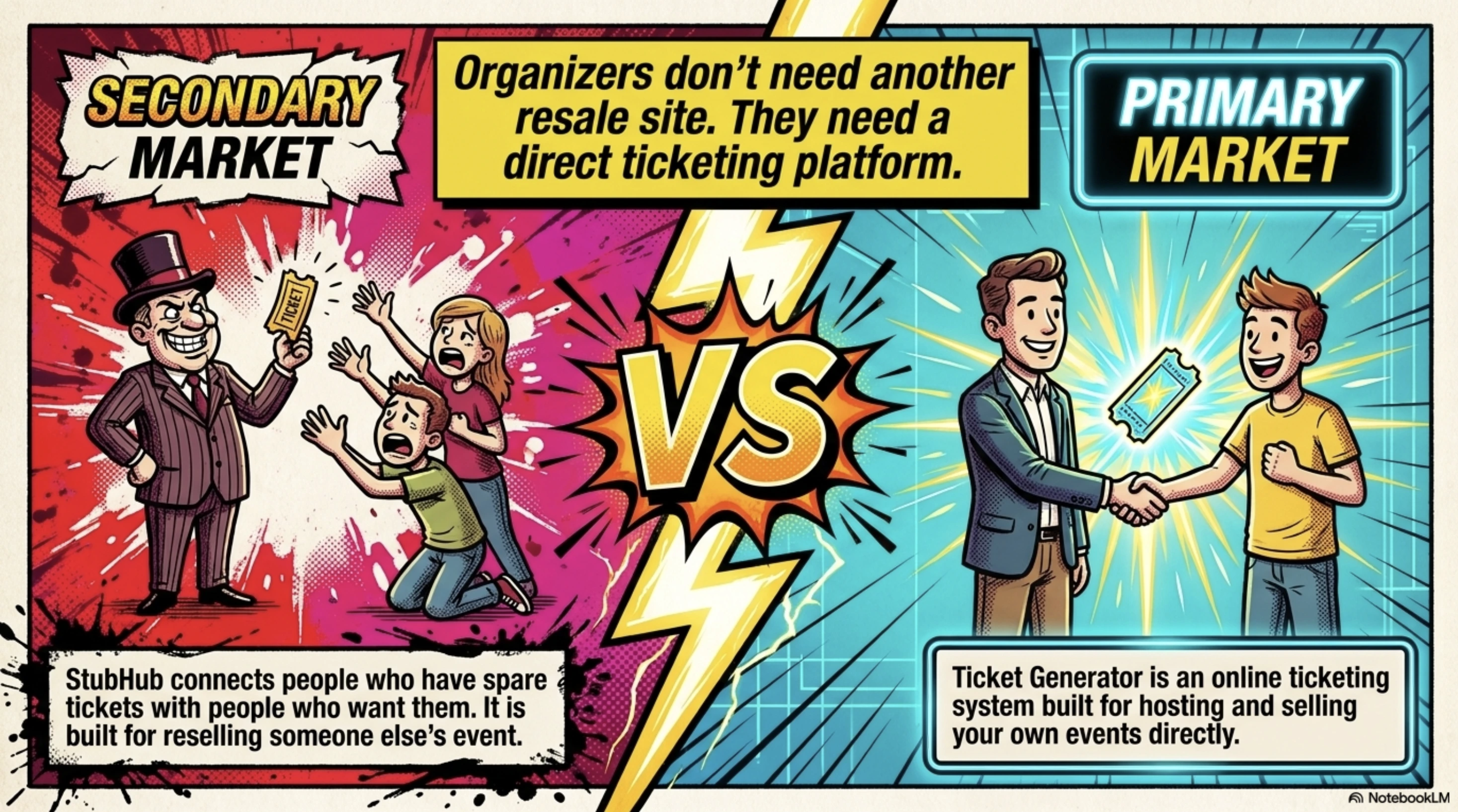
StubHub is a secondary (resale) marketplace where fans buy and sell tickets to events that someone else is hosting. It does not run events or issue original tickets; it connects sellers who have spare tickets with buyers who want them.
Founded in 2000 and publicly listed on the New York Stock Exchange after its September 2025 IPO, StubHub is one of the most recognizable names in resale. It has a deep inventory for big concerts and sports, and its buyer guarantee gives people confidence that the ticket they buy will be valid. Those are real strengths worth acknowledging.
The frustration shows up at checkout. StubHub does not publish a fixed fee chart; fees are dynamic and rise with demand and ticket price. Across event types, industry analyses commonly estimate:
Buyer fees of roughly 28% on average are added on top of the listed price, sometimes reaching 30–35% for high-demand events.
A seller's commission of about 15% of the final sale price.
Seller payouts typically arrive only after the event takes place, not at the point of sale.
That two-sided fee model is exactly why so many buyers and sellers go looking for something better. StubHub is not alone here, the same complaints drive people to search for the best Ticketmaster alternative, because the two largest resale brands share the same checkout problem.
What are the best StubHub alternatives for buying tickets?
If you are a fan buying resale tickets, the best StubHub alternative is usually a marketplace with lower or no buyer fees, such as TickPick, SeatGeek, Gametime, or Vivid Seats. Each has a different strength, so the right pick depends on the event and how you like to shop.
Listed price is the final price; smaller inventory
SeatGeek
Visual seat maps, deal scores
Built into all-in price
3D seat views and Deal Score; some official team partnerships
Gametime
Last-minute, mobile
~10–15%
App-first; great for day-of buying, smaller catalog
Vivid Seats
Loyalty rewards
~15–30%
Rewards program; fees vary widely by event
Note: Fee figures are industry estimates; actual fees are dynamic and vary by event, demand, and timing. Always check the all-in total before you buy.
Comparing totals is easier than it used to be. Since the FTC's Junk Fees Rule took effect on May 12, 2025, sellers, resellers, and third-party platforms must show the full price, including mandatory fees, upfront. So the headline number you see should now be much closer to what you actually pay. If price is your only concern, our breakdown of ticketing platforms with the lowest ticket fees goes deeper.
Why do event organizers need a different StubHub alternative?
If you host events, the real problem is not which resale site is cheapest. It is that a resale marketplace sits between you and your audience, taking a cut and owning the relationship. For an organizer, comparing resale platforms solves the wrong problem.
Think about what happens when your tickets end up on a resale marketplace. Your fans pay a markup you never see. The extra fees at checkout cause some of them to abandon the purchase entirely. And you lose the one thing that compounds over time, a direct line to the people who come to your events.
Did You Know? Roughly 48% of online shoppers abandon checkout when extra costs like fees are too high, making it the single biggest reason for cart abandonment, according to a 2024 survey of 1,012 U.S. adults. Source:
Baymard Institute.
Selling on a marketplace also means you do not fully control three things that matter: pricing (the platform's fees inflate the final number), data (the platform owns the buyer relationship), and entry security (resale tickets are a common source of duplicate-scan and counterfeit headaches at the gate).
So the organizer's StubHub alternative is not another resale site; it is a direct, primary ticketing platform. The same logic applies whether you are weighing marketplaces or Eventbrite alternatives: the question is how much control and revenue you keep.
Pro Tip: Try
Ticket Generator
to sell your own event tickets directly, set your own price, keep 100% of the revenue, and skip the resale markup.
How does selling tickets directly compare to using a resale marketplace?
Selling directly means you set the price, keep the revenue, own the attendee data, and control entry; a resale marketplace does the opposite on every count. Here is the side-by-side for an organizer.
What matters to you
Resale marketplace (e.g., StubHub)
Direct ticketing (Ticket Generator)
Who sets the price
Sellers and demand; the platform adds fees
You set the face price
Who pays the platform fee
Both buyer and seller
You pay per ticket generated, no % cut of sales
Commission on sales
~15% seller + buyer fees
Zero commission
When you get paid
Usually, after the event
Instantly, via your own payment gateway
Branding
Platform-branded
Your brand, your custom domain
Attendee data
Owned by the platform
Owned by you
Entry & counterfeit control
Limited; resale duplicate risk
Unique QR + Ticket ID, duplicate detection
Best for
Reselling spare tickets to others' events
Hosting and selling your own events
The data-and-control gap is usually the deciding factor. As Anshul Singh Bisht, Head of Event Technology at Ticket Generator, puts it:
“Nine out of ten organizers we onboard mention counterfeit prevention as the first reason they're switching; the cost and speed factors are added benefits. They've faced duplicate tickets at the gate, refund disputes, guests who claim they paid but aren't on the list, and they don't want to live that twice.”
— Anshul Singh Bisht, Head of Event Technology, Ticket Generator
How Ticket Generator helps organizers skip the resale markup?
Ticket Generator is built for organizers who want full control over how they sell, distribute, and validate tickets, without paying a commission on every sale. It is a primary ticketing platform, not a resale marketplace, which makes it the natural alternative for anyone tired of feeding a middleman.
Here is how that maps to the problems above:
Credit-based pricing, zero commission. You pay per ticket generated, not a percentage of each sale. Payments land directly in your own Stripe, PayPal, or Razorpay account, so you settle instantly instead of waiting until after the event.
Counterfeit and duplicate control. Every ticket carries a unique QR code and a unique Ticket ID. Scan the same ticket twice, and it is flagged instantly, with Valid / Invalid / Duplicate / Expired results across multiple gates, the duplicate problem resale tickets are notorious for.
Your brand, your data. Branded event pages on your own custom domain, with no platform watermark, and full ownership of attendee data and analytics.
Multi-channel delivery. Send QR tickets by email, SMS, or WhatsApp, schedule a batch to go out automatically, and resend lost tickets with a click.
This is not a theory. Felipe Motta, a food-and-beverage brand in Panama, used Ticket Generator to issue 638+ tickets across events, hit 96% maximum attendance, and generated about 95% of those tickets through the API. Across the platform as a whole, Ticket Generator has powered 1,000,000+ tickets, 30,000+ events, in 100+ countries.
Pro Tip: If your events recur, clone your last event in Ticket Generator and reuse the same event page, ticket settings, and QR validation. Need a fresh look? Generate a new ticket background with the built-in AI design tool or fine-tune your design using the Canva integration. You'll have a branded, secure event ready to sell in minutes, with no marketplace listing, no commission, and no waiting for payouts.
The bottom line on choosing a StubHub alternative
The best StubHub alternative is the one that fits your role. Buyers who just want a fair price should compare lower-fee resale sites and check the all-in total before paying; fees are real, but they are now easier to see upfront.
Organizers are playing a different game. Every dollar a resale marketplace skims is a dollar that leaves your event, and every fee that surprises a fan at checkout is a sale you risk losing. Selling directly keeps the price, the revenue, the data, and the gate under your control. That is not a small optimization. It is a different business model. And it is exactly what Ticket Generator was built to give you.
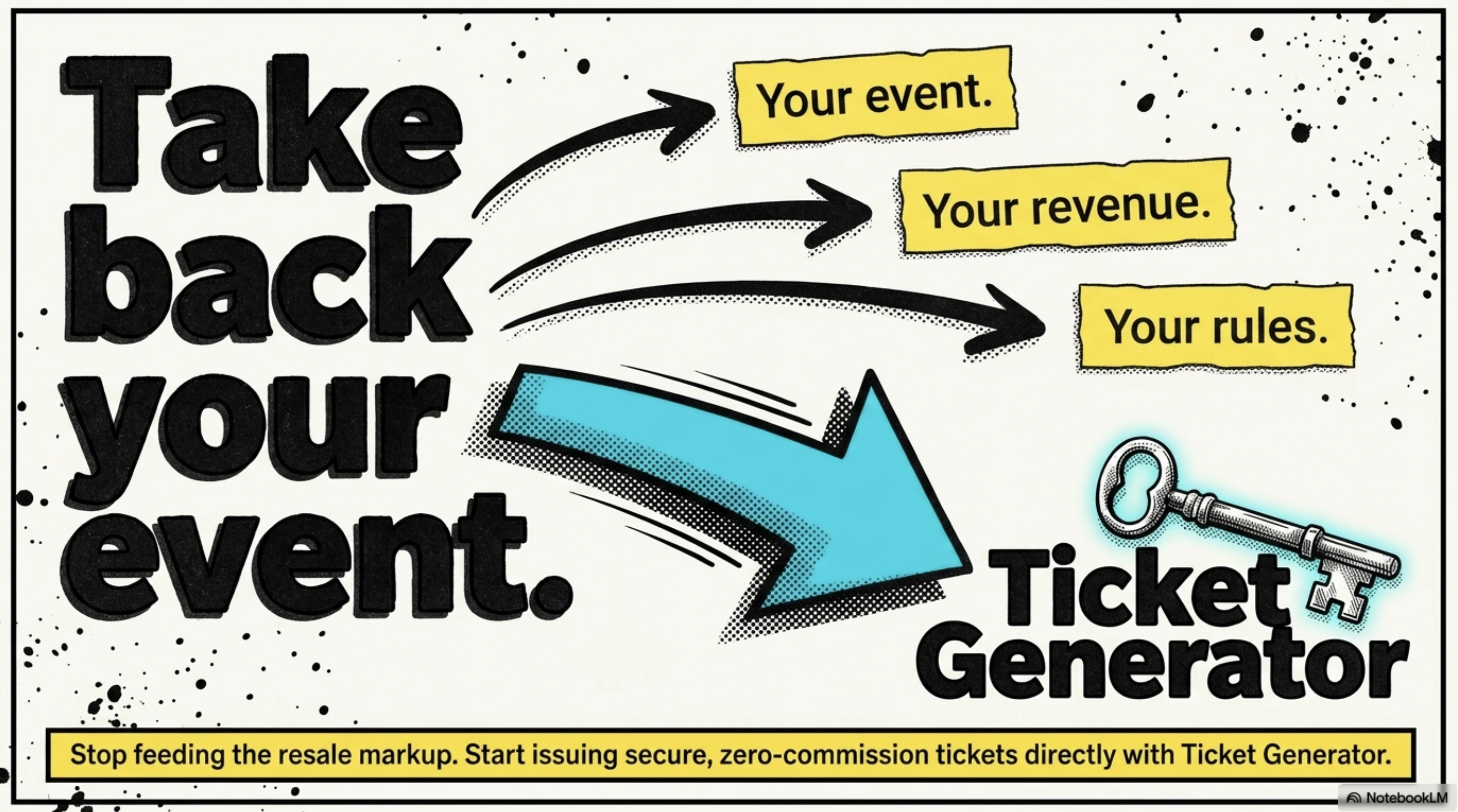
Ready to skip marketplace fees? Try Ticket Generator to sell your event tickets directly with zero commission, secure QR validation, and keep the revenue a resale marketplace would have taken. Your event. Your revenue. Your rules.
FAQs: StubHub Alternatives
1. What is the best StubHub alternative with no fees?
For buyers, TickPick is the best-known no-buyer-fee resale marketplace. The listed price is the price you pay. For organizers selling their own events, the no-commission alternative is a direct platform like Ticket Generator, where you pay per ticket generated instead of a cut of every sale.
2. Can I use a StubHub alternative to sell my own event tickets?
Not really, StubHub and sites like it are resale marketplaces for reselling tickets to events other people host. To sell tickets to your own event, you need a primary ticketing platform. Ticket Generator lets you create, brand, distribute, and validate your own QR tickets directly.
3. Why are StubHub fees so high?
StubHub earns from both sides of every sale. A seller commission of about 15% plus a buyer service fee that averages around 28% and rises with demand. Because the fees are dynamic and stack on both ends, the total cost of a resale ticket can be far above its face value.
4. Is Ticket Generator a StubHub alternative?
Yes, but a different kind. Ticket Generator is not a resale marketplace; it is a direct ticketing platform for organizers. It is the right StubHub alternative if your goal is to sell your own event tickets, keep 100% of the revenue, and control entry with secure QR codes, rather than reselling someone else's tickets.
5. Does the FTC's fee rule make StubHub cheaper?
No, it makes fees more visible, not lower. The FTC's Junk Fees Rule (effective May 12, 2025) requires platforms to show the all-in total upfront, so you see the real price before checkout. The fees still exist; you just no longer get surprised by them at the last step.
Ashish Chandra has spent 5+ years writing about event technology, covering topics such as ticket design, QR check-ins, attendee management, and event marketing strategy. As the Content Lead at Ticket Generator, Ashish has analyzed hundreds of real-world event workflows and ticketing setups, helping organizers across industries use QR-based tickets, event landing pages, and smarter ticketing systems to run smoother, better-attended events.
His writing is shaped by real user needs and the questions organizers ask most often: How do I sell more tickets? How do I avoid chaos at the door? How do I make my next event better than my last?
When he steps away from the screen, you'll likely find him hiking a quiet trail or tending his plants- his preferred way to reset.





.png)







.webp)

.svg)
.svg)